
Introduction
Learning how to drive a manual car may seem intimidating at first, especially if you’ve only driven automatic vehicles. Coordinating the clutch, gear shifter, accelerator, and brake requires practice, but once you understand the basics, driving a manual transmission becomes a valuable skill. Many drivers enjoy manual cars because they offer greater control, better driving engagement, and often lower maintenance costs than automatic vehicles.
If you’ve ever wondered why your car stalls when starting, how to shift gears smoothly, or how to master hill starts, you’re not alone. These are common challenges for beginners. The good news is that anyone can learn to drive a manual car with patience and consistent practice.
This guide explains everything you need to know—from understanding the controls to driving confidently on city streets and highways.
The Key Question: How Do You Drive a Manual Car?
The biggest question beginners ask is simple:
How do you drive a manual car without stalling or damaging the transmission?
The answer is learning how the clutch and gears work together. Unlike an automatic transmission, a manual transmission requires the driver to change gears using a gear stick while operating a clutch pedal.
The clutch temporarily disconnects the engine from the wheels, allowing you to change gears smoothly. Mastering clutch control is the key to driving a manual vehicle confidently.
Understanding the Basics of a Manual Transmission
Before driving, it’s important to understand what each control does.
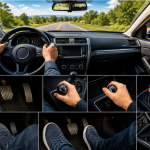
The Three Pedals
A manual car has three pedals:
- Clutch (left pedal): Disconnects engine power from the transmission.
- Brake (middle pedal): Slows or stops the vehicle.
- Accelerator (right pedal): Controls engine speed.
Remember this simple rule:
Left foot = Clutch
Right foot = Brake and Accelerator
Never use your left foot for braking.
Understanding the Gear Stick
Most manual cars have five or six forward gears plus reverse.
Typical pattern:
- First Gear (1)
- Second Gear (2)
- Third Gear (3)
- Fourth Gear (4)
- Fifth Gear (5)
- Sixth Gear (if available)
- Reverse (R)
Lower gears provide more power for starting and climbing hills, while higher gears improve fuel economy at higher speeds.
Why Driving a Manual Car Is Worth Learning
Many drivers choose manual cars because they offer several advantages.
Better Vehicle Control
Manual transmissions allow drivers to choose exactly when to shift gears.
Lower Purchase Price
Many manual cars cost less than automatic versions.
Better Fuel Efficiency
Some manual vehicles achieve slightly better fuel economy.
Lower Repair Costs
Manual transmissions are often simpler and less expensive to repair.
More Driving Enjoyment
Many enthusiasts enjoy the increased involvement that comes with shifting gears.
Step-by-Step Guide: How to Drive a Manual Car
Step 1: Adjust Your Driving Position
Before starting:
- Adjust your seat.
- Adjust mirrors.
- Fasten your seatbelt.
- Ensure you can fully press the clutch.
Comfort is essential for good clutch control.
Step 2: Start the Engine
Before turning the key:
- Press the clutch fully.
- Ensure the gear lever is in Neutral.
- Start the engine.
Many newer manual cars require the clutch to be pressed before starting.
Step 3: Select First Gear
Keep the clutch fully pressed.
Move the gear stick into First Gear.
Do not release the clutch suddenly.
Step 4: Find the Clutch Bite Point
The bite point is where the clutch begins transferring power to the wheels.
Slowly release the clutch until:
- Engine speed drops slightly.
- The car wants to move forward.
Pause briefly at this point.
This is the most important skill for manual driving.
Step 5: Move Forward
While holding the clutch near the bite point:
- Gently press the accelerator.
- Continue slowly releasing the clutch.
Avoid pressing too much gas.
The car should move smoothly.
Step 6: Accelerate
Once moving:
- Fully release the clutch.
- Press the accelerator gradually.
Do not keep your foot resting on the clutch.
When Should You Change Gears?
Although every vehicle is different, beginners can use these general guidelines.
- First Gear: 0–10 mph (0–15 km/h)
- Second Gear: 10–20 mph
- Third Gear: 20–30 mph
- Fourth Gear: 30–45 mph
- Fifth Gear: Above 45 mph
Listen to the engine.
If it sounds like it’s working too hard, shift up.
If it struggles, shift down.
How to Shift Gears Smoothly
When shifting:
- Lift off the accelerator.
- Press the clutch fully.
- Move the gear lever.
- Release the clutch smoothly.
- Press the accelerator again.
Avoid rushing.
Smooth movements create smooth gear changes.
How to Stop a Manual Car
When approaching a stop:
- Lift off the accelerator.
- Press the brake.
- Press the clutch before the engine stalls.
- Shift into Neutral.
- Release the clutch.
- Keep braking until stopped.
Apply the parking brake if parking.
How to Reverse
Before reversing:
- Stop completely.
- Press the clutch.
- Select Reverse.
- Check mirrors.
- Look behind you.
- Slowly release the clutch.
Reverse slowly at all times.
How to Start on a Hill
Hill starts are often the hardest part for beginners.
Here’s the easiest method:
- Apply the handbrake.
- Press the clutch.
- Select First Gear.
- Find the bite point.
- Add gentle acceleration.
- Release the handbrake.
- Continue releasing the clutch.
Practice this technique repeatedly.
Common Beginner Mistakes
Releasing the Clutch Too Fast
This causes the engine to stall.
Always release it gradually.
Giving Too Much Gas
Excessive acceleration wears the clutch unnecessarily.
Riding the Clutch
Resting your foot on the clutch causes premature clutch wear.
Remove your foot after each gear change.
Looking at the Gear Stick
Keep your eyes on the road.
Practice gear changes until they become automatic.
Skipping Practice
Manual driving improves only through repetition.
Tips for Learning Faster
- Practice in an empty parking lot.
- Learn clutch control first.
- Don’t worry about occasional stalls.
- Drive regularly.
- Stay calm.
- Watch experienced drivers.
- Practice hill starts frequently.
- Learn engine sounds.
- Shift smoothly rather than quickly.
How Long Does It Take to Learn?
Most beginners learn the basics within one or two days.
Driving confidently usually takes several weeks of regular practice.
Mastering smooth gear changes may take one to three months depending on how often you drive.
Can Driving a Manual Damage the Car?
Not if driven correctly.
Avoid:
- Riding the clutch
- Shifting aggressively
- Missing gears
- Launching the car with high RPM
- Resting your hand on the gear lever continuously
Proper driving significantly extends clutch life.
Conclusion
Learning how to drive a manual car is one of the most rewarding driving skills you can develop. While the clutch and gear changes may feel difficult at first, consistent practice quickly builds confidence. Focus on mastering the clutch bite point, shifting smoothly, and understanding when to change gears. Start in a safe, open area, practice regularly, and don’t be discouraged by occasional stalls—they’re a normal part of learning. With patience and repetition, driving a manual transmission will become second nature, giving you greater control, confidence, and enjoyment every time you get behind the wheel.
Frequently Asked Questions (FAQs)
1. Is it difficult to learn how to drive a manual car?
It can feel challenging at first, but most beginners become comfortable after several practice sessions. Consistent practice is the key to success.
2. Why does my manual car keep stalling?
A manual car usually stalls because the clutch is released too quickly or there isn’t enough acceleration when moving off.
3. Can I learn to drive a manual car in one day?
You can learn the basics in a day, but becoming confident with gear changes, hill starts, and smooth driving usually takes several weeks of practice.
4. What gear should I use when starting the car?
Always use First Gear when starting from a complete stop unless your vehicle’s manual recommends otherwise.
5. Is driving a manual car better than an automatic?
Manual cars offer greater control and can be more enjoyable to drive, while automatic cars are generally easier for beginners and in heavy traffic.
6. How do I know when to change gears?
Watch your speed, listen to the engine, and refer to your vehicle’s recommended RPM range. Shift up as the engine begins revving higher and shift down if the engine starts to struggle.
7. Does driving a manual save fuel?
In many cases, modern manual cars can offer similar or slightly better fuel efficiency than comparable automatic models, depending on driving habits and vehicle design.