








Introduction
A car battery is one of the most essential components of any vehicle. Without it, your car cannot start, and many of the electrical systems that modern drivers rely on would not function properly. Despite its importance, many vehicle owners do not think about their battery until they experience a problem. One of the most common questions drivers ask is, “How long does a car battery last?”
The answer varies depending on several factors, including climate, driving habits, maintenance practices, and battery quality. While most car batteries last between three and five years, some may fail sooner, while others can continue working efficiently for much longer.
Understanding how long a car battery typically lasts, what affects its lifespan, and how to recognize signs of failure can help you avoid unexpected breakdowns and expensive repairs. This guide provides a comprehensive look at car battery life, helping drivers make informed decisions about maintenance and replacement.
The Key Question: How Long Does a Car Battery Last?
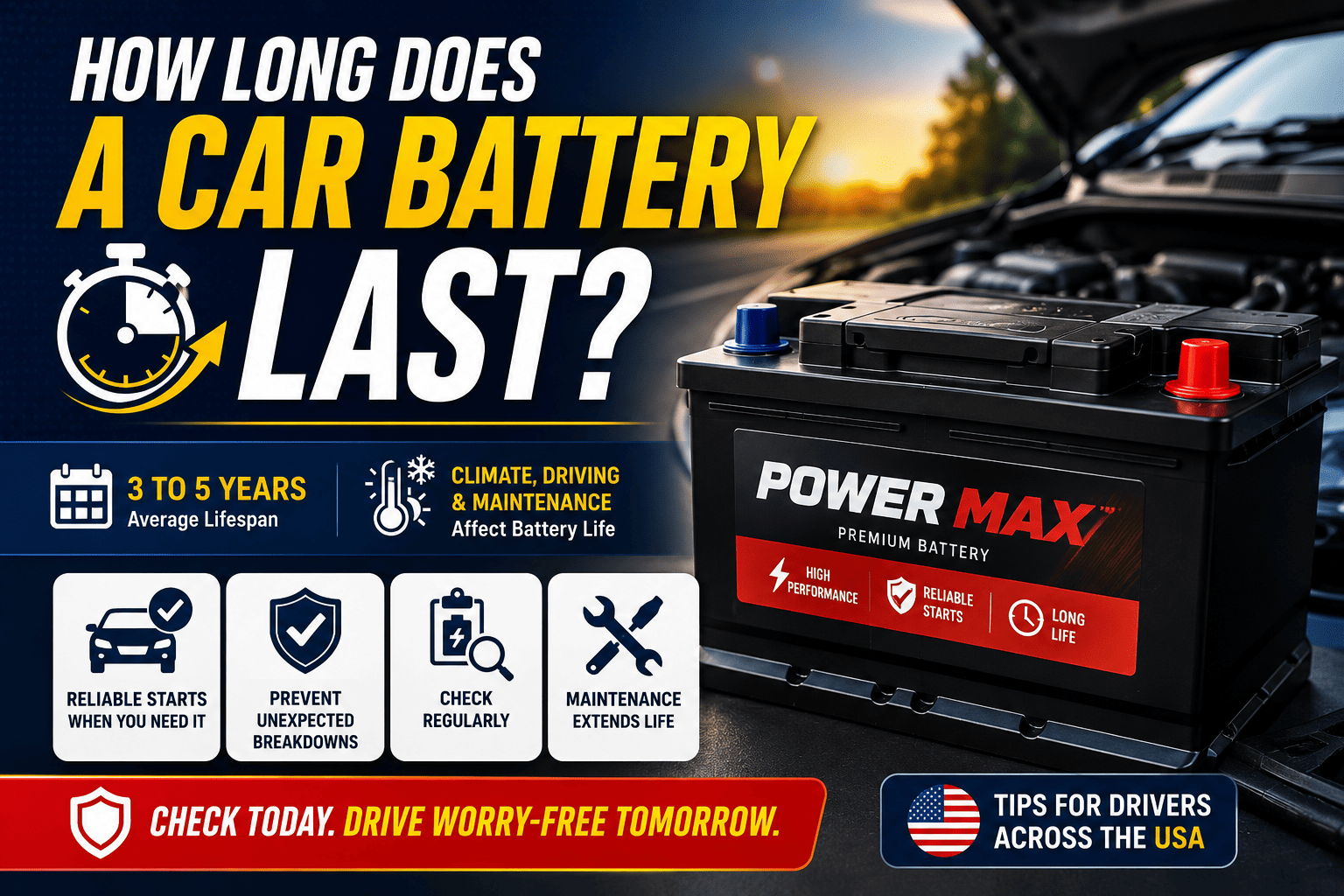
The average lifespan of a standard car battery is generally three to five years. However, this figure should be considered a guideline rather than a guarantee. Many variables influence how long a battery remains reliable.
For example, a vehicle driven regularly in a moderate climate may have a battery that lasts five or six years. On the other hand, a battery exposed to extreme heat, frequent short trips, or poor maintenance may fail in as little as two or three years.
Modern vehicles place greater demands on batteries than older models. Features such as touchscreen infotainment systems, heated seats, GPS navigation, advanced driver-assistance technologies, and multiple charging ports all require electrical power. As a result, battery performance has become more important than ever.
Drivers often wonder whether they should wait for a battery to fail before replacing it. While some people do, proactive replacement is usually the better choice once a battery reaches the end of its expected lifespan. Waiting too long can leave you stranded unexpectedly.
Understanding Car Batteries: Context and Background
To understand battery lifespan, it helps to know how a battery works.
A car battery stores electrical energy and delivers it when needed. When you start your vehicle, the battery supplies power to the starter motor. This motor turns the engine until combustion begins. Once the engine is running, the alternator generates electricity and recharges the battery.
Most vehicles use lead-acid batteries. These batteries contain lead plates submerged in an electrolyte solution. Chemical reactions inside the battery produce electrical energy. Over time, these reactions become less effective, reducing the battery’s ability to hold a charge.
Unlike engine components that may last for decades, batteries naturally deteriorate. Every charge and discharge cycle contributes to wear. Eventually, the battery reaches a point where it can no longer provide enough power to start the vehicle reliably.
Typical Battery Lifespans
Different battery types have different life expectancies:
- Standard lead-acid batteries: 3–5 years
- AGM (Absorbent Glass Mat) batteries: 4–7 years
- Premium batteries: Often 5 years or more
- Batteries in extreme climates: 2–4 years
While quality matters, environmental and driving conditions often play an even bigger role in determining battery life.
Factors That Affect How Long a Car Battery Lasts
Climate and Temperature
Temperature is one of the most significant influences on battery longevity.
Hot Weather
Many people assume winter is the biggest threat to battery health, but excessive heat is often more damaging.
High temperatures can:
- Accelerate chemical degradation
- Cause battery fluid evaporation
- Increase internal corrosion
- Reduce overall battery lifespan
Drivers in hot climates frequently replace batteries sooner than those living in cooler regions.
Cold Weather
Cold weather affects battery performance differently.
Low temperatures:
- Slow chemical reactions
- Reduce available battery power
- Increase engine starting resistance
Although cold weather may not permanently damage a healthy battery, it often exposes weaknesses in older batteries.
Driving Habits
The way you use your vehicle has a major impact on battery health.
Frequent Short Trips
Starting an engine requires a significant amount of battery power. If you only drive short distances, the alternator may not have enough time to fully recharge the battery.
Repeated short trips can gradually weaken the battery over time.
Long Drives
Longer trips allow the alternator to restore the battery’s charge completely. Drivers who regularly travel on highways often experience longer battery life.
Vehicle Storage
A car that sits unused for extended periods can experience battery drain.
Even when turned off, vehicles continue drawing small amounts of power for systems such as:
- Security alarms
- Keyless entry
- Clock functions
- Computer memory
If a vehicle remains parked for weeks or months, the battery may discharge significantly.
Battery Quality
Higher-quality batteries generally offer:
- Better durability
- Greater reserve capacity
- Improved vibration resistance
- Longer warranties
While premium batteries may cost more initially, they often provide better long-term value.
Electrical Demand
Modern vehicles rely heavily on electronics.
Features such as:
- Advanced infotainment systems
- Smartphone charging
- Heated seats
- Power windows
- Driver assistance technologies
all place additional demands on the battery and charging system.
Common Signs of a Failing Battery

Recognizing battery problems early can prevent unexpected breakdowns.
Slow Engine Cranking
One of the first warning signs is a sluggish engine start.
If the engine turns over more slowly than usual, the battery may be losing its ability to deliver sufficient power.
Dim Headlights
Weak batteries often cause reduced lighting performance.
You may notice:
- Dim headlights
- Flickering interior lights
- Dashboard brightness fluctuations
These symptoms often indicate declining battery capacity.
Dashboard Warning Light
Most vehicles include a battery warning light.
When this light appears, it may indicate:
- Battery issues
- Alternator problems
- Charging system faults
Prompt inspection is recommended.
Clicking Sounds During Startup
A clicking noise when attempting to start the engine often signals insufficient battery power.
This is one of the most recognizable symptoms of a weak battery.
Corrosion Around Terminals
Corrosion appears as a white, blue, or green substance around battery terminals.
Excessive corrosion can interfere with electrical connections and charging efficiency.
Swollen Battery Case
Extreme temperatures can cause battery swelling.
A swollen battery housing is a sign of internal damage and should be replaced immediately.
How to Extend the Life of Your Car Battery
While batteries eventually wear out, proper care can maximize their lifespan.
Drive Your Vehicle Regularly
Regular driving helps keep the battery charged.
If you do not drive often, consider taking your vehicle for a longer drive at least once a week.
Avoid Excessive Short Trips
Combining multiple errands into one trip allows the alternator more time to recharge the battery fully.
This simple habit can significantly improve battery health.
Turn Off Electronics
Before exiting your vehicle, make sure all accessories are switched off.
Common battery drains include:
- Headlights
- Interior lights
- Chargers
- Audio systems
Leaving accessories running can quickly discharge the battery.
Keep Battery Terminals Clean
Clean terminals ensure efficient electrical flow.
Regular inspections and cleaning help prevent corrosion-related problems.
Secure the Battery
A loose battery can experience excessive vibration while driving.
Vibration damages internal components and shortens battery lifespan.
Always ensure the battery is properly mounted.
Test the Battery Annually
Battery testing can reveal declining performance before complete failure occurs.
Experts often recommend annual testing once a battery reaches three years of age.
Protect Against Extreme Temperatures
Whenever possible:
- Park in shaded areas during hot weather
- Use a garage in winter
- Avoid prolonged exposure to severe conditions
Reducing temperature extremes helps preserve battery health.
When Should You Replace a Car Battery?
Waiting for complete battery failure is rarely the best strategy.
Consider replacement if:
- The battery is over four years old
- Starting performance is declining
- Battery testing shows reduced capacity
- Corrosion is excessive
- Electrical issues occur regularly
Preventive replacement often saves drivers from inconvenient roadside breakdowns.
Frequently Asked Questions
Can a Car Battery Last More Than Five Years?
Yes. Some batteries last six years or longer, especially when properly maintained and operated in favorable conditions.
Does Driving Every Day Extend Battery Life?
Generally, yes. Regular driving helps maintain proper charge levels and reduces the likelihood of deep discharge.
Can Extreme Heat Damage a Battery?
Absolutely. Excessive heat is one of the leading causes of premature battery failure.
Is It Safe to Drive With a Weak Battery?
While possible for a short time, a weak battery can fail unexpectedly and leave you stranded. Replacement is usually recommended.
Can a Dead Battery Be Recharged?
Sometimes. If the battery is relatively healthy and simply discharged, recharging may restore function. However, older batteries often require replacement.
Conclusion
So, how long does a car battery last? For most drivers, the answer is between three and five years. However, climate, driving habits, maintenance, battery quality, and vehicle usage all play major roles in determining actual lifespan.
A healthy battery is essential for reliable vehicle operation. By understanding the factors that affect battery life and recognizing warning signs such as slow starts, dim lights, and corrosion, drivers can avoid unexpected failures and costly inconveniences.
Regular maintenance, routine inspections, annual testing, and proper driving habits can significantly extend battery life. While no battery lasts forever, proactive care ensures you get the maximum value from your investment.
Ultimately, the best approach is to monitor your battery’s condition and replace it before complete failure occurs. Doing so will provide peace of mind, improve reliability, and help ensure that your vehicle starts every time you need it.