
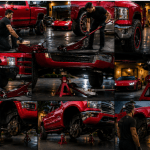








The Key Question: Can You Lift a Truck Yourself?
Many truck owners want a higher ride height for better ground clearance, larger tires, improved off-road performance, or a more aggressive appearance. However, professional lift kit installation can cost hundreds or even thousands of dollars. As a result, many people ask: How can I lift a truck myself DIY?
The good news is that many truck lift projects can be completed at home with the right tools, preparation, and safety precautions. Nevertheless, lifting a truck requires careful planning because mistakes can affect handling, suspension performance, tire wear, and overall safety.
Before starting the project, you should understand the different lift options, required tools, and installation process. By following proper procedures, you can successfully lift your truck while saving money and gaining valuable mechanical experience.
Understanding Truck Lifts and Why People Install Them
Before you begin, it is important to understand what a truck lift actually does.
A truck lift raises the vehicle higher off the ground. Depending on the lift type, the suspension, body, or both are elevated. Consequently, the truck gains additional clearance and can accommodate larger tires.
Common Reasons to Lift a Truck
Truck owners choose lift kits for several reasons:
- Better off-road capability
- Increased ground clearance
- Improved approach and departure angles
- Ability to install larger tires
- More aggressive appearance
- Enhanced visibility on the road
- Increased customization options
Although appearance motivates many owners, practical benefits often drive the decision as well.
Types of Truck Lifts
Before purchasing any kit, you should understand the major lift categories.
1. Leveling Kit
A leveling kit raises the front of the truck to match the rear height.
Benefits include:
- Affordable cost
- Easier installation
- Improved appearance
- Space for slightly larger tires
Typically, leveling kits provide 1 to 3 inches of lift.
2. Body Lift Kit
A body lift separates the truck body from the frame using spacers.
Advantages include:
- Lower cost
- Minimal suspension changes
- Additional tire clearance
However, body lifts do not increase ground clearance beneath the frame.
3. Suspension Lift Kit
A suspension lift raises the entire vehicle by modifying suspension components.
Benefits include:
- Significant ground clearance
- Better off-road performance
- Larger tire compatibility
However, installation requires more time, skill, and attention to detail.
Tools and Equipment You Will Need
Before starting the installation, gather all required tools.
Essential Tools
- Hydraulic floor jack
- Heavy-duty jack stands
- Socket set
- Ratchet set
- Torque wrench
- Combination wrenches
- Pry bar
- Hammer
- Screwdrivers
- Safety gloves
- Safety glasses
- Wheel chocks
Optional Tools
Depending on your lift kit, you may also need:
- Impact wrench
- Spring compressor
- Penetrating lubricant
- Ball joint separator
- Breaker bar
Having all tools ready beforehand helps prevent delays during installation.
Safety Considerations Before Lifting Your Truck
Safety should always come first.
Many DIY mechanics rush through the preparation stage. Unfortunately, that approach often causes accidents.
Before lifting your truck:
Work on a Flat Surface
Always park on a level concrete surface.
Avoid:
- Gravel
- Dirt
- Uneven pavement
- Sloped driveways
A stable surface prevents vehicle movement.
Use Wheel Chocks
Place wheel chocks behind the tires that remain on the ground.
This simple step greatly reduces the risk of rolling.
Never Rely Solely on a Jack
Always support the truck using jack stands.
A hydraulic jack can fail unexpectedly. Therefore, jack stands provide essential protection while you work underneath the vehicle.
Read the Lift Kit Instructions
Every manufacturer designs lift kits differently.
Read the entire instruction manual before beginning installation.
Step-by-Step Guide to Lift a Truck Yourself DIY
Now let’s examine the installation process.
Although exact steps vary by truck model and lift kit type, the following guide covers the general procedure.
Step 1: Prepare the Work Area
First, gather all tools and organize the workspace.
Next:
- Park the truck on level ground.
- Engage the parking brake.
- Install wheel chocks.
- Gather safety equipment.
Preparation helps the project run smoothly.
Step 2: Measure the Current Ride Height
Before disassembling anything, measure the truck’s current height.
Measure from:
- Ground to fender
- Ground to bumper
- Ground to frame
Record all measurements.
Later, these numbers help verify the final lift height.
Step 3: Lift the Truck
Position the floor jack under the recommended lifting points.
Then:
- Raise the vehicle slowly.
- Place jack stands beneath the frame.
- Lower the truck carefully onto the stands.
Double-check stability before continuing.
Step 4: Remove the Wheels
Use a lug wrench or impact wrench to remove the wheels.
Store the lug nuts safely.
Removing the wheels provides access to suspension components.
Step 5: Disconnect Suspension Components
Depending on the lift kit, you may need to disconnect:
- Sway bar links
- Shock absorbers
- Tie rods
- Control arms
- Brake line brackets
Take photos during disassembly.
Those photos can help during reassembly.
Step 6: Install Lift Components
Now install the lift kit according to the manufacturer’s instructions.
For a leveling kit, you may install:
- Strut spacers
- Coil spring spacers
For a suspension lift, you may install:
- Lifted control arms
- New shocks
- Extended brackets
- Lift blocks
Work carefully and verify each component placement.
Step 7: Tighten Hardware Correctly
After installing the lift components, tighten all bolts.
Most importantly, use a torque wrench.
Overtightening can damage components, while undertightening can create dangerous conditions.
Always follow manufacturer torque specifications.
Step 8: Reinstall Wheels
Once all lift components are secure:
- Reinstall the wheels.
- Hand-tighten lug nuts.
- Lower the truck carefully.
- Torque lug nuts to specification.
This step completes the mechanical installation.
Step 9: Inspect Everything Thoroughly
Before driving, inspect every component.
Check:
- Brake lines
- Suspension bolts
- Shock mounts
- Steering components
- Tire clearance
A detailed inspection helps identify problems before they become serious.
Step 10: Get a Professional Alignment
Many DIY installers skip this step.
However, suspension geometry changes after a lift installation.
As a result, wheel alignment becomes necessary.
A professional alignment helps:
- Improve handling
- Reduce tire wear
- Increase safety
- Maintain steering accuracy
Even experienced mechanics usually schedule an alignment immediately after installing a lift kit.
Common Mistakes to Avoid
Many first-time installers make avoidable mistakes.
Fortunately, you can prevent most problems with proper planning.
Ignoring Torque Specifications
Always use a torque wrench.
Improperly tightened bolts can loosen over time.
Choosing the Wrong Lift Kit
Not every lift kit fits every truck.
Verify compatibility before purchasing.
Forgetting Alignment
Misalignment can quickly destroy expensive tires.
Schedule an alignment immediately.
Installing Oversized Tires Without Research
Larger tires may rub against:
- Fenders
- Suspension components
- Wheel wells
Check tire clearance requirements beforehand.
Rushing the Project
Take your time.
Careful work usually produces better results and fewer problems.
Is DIY Truck Lifting Worth It?
For many truck owners, the answer is yes.
DIY installation offers several advantages:
Benefits
- Significant cost savings
- Valuable mechanical experience
- Greater customization control
- Personal satisfaction
Challenges
- Time commitment
- Tool investment
- Learning curve
- Potential installation mistakes
If you enjoy working on vehicles and have basic mechanical skills, lifting a truck yourself can be a rewarding project.
However, if you lack experience or confidence, professional installation may be the safer option.
Conclusion
Learning how to lift a truck yourself DIY can save money while helping you customize your vehicle exactly the way you want. By understanding the different lift types, gathering proper tools, following safety procedures, and carefully completing each installation step, you can successfully raise your truck’s height and improve its appearance and capability.
Most importantly, prioritize safety throughout the project. Work on a level surface, use quality jack stands, follow manufacturer instructions, and schedule a professional alignment after installation. When you combine preparation with patience, a DIY truck lift can become a successful and rewarding upgrade that enhances both performance and style.
FAQs
1. Can I lift my truck at home by myself?
Yes, you can install many leveling kits and some suspension lifts at home if you have the proper tools, mechanical knowledge, and safety equipment.
2. How much does it cost to lift a truck yourself?
DIY truck lift costs typically range from $100 to $2,500 depending on the lift type, truck model, and quality of components.
3. Do I need an alignment after lifting my truck?
Yes. A wheel alignment is highly recommended after any suspension modification because the lift changes suspension geometry.
4. How long does a DIY truck lift installation take?
Most leveling kits take 2–6 hours, while larger suspension lifts may require 8–20 hours depending on experience and vehicle complexity.
5. Can lifting a truck damage it?
A properly installed lift kit should not damage the truck. However, poor installation or low-quality components can cause suspension, steering, and tire problems.
6. What is the easiest truck lift to install?
A leveling kit is usually the easiest and most beginner-friendly truck lift option because it requires fewer modifications.
7. What size tires can I use after lifting my truck?
The tire size depends on the truck model, wheel specifications, and lift height. Always consult the lift kit manufacturer for recommended tire sizes.