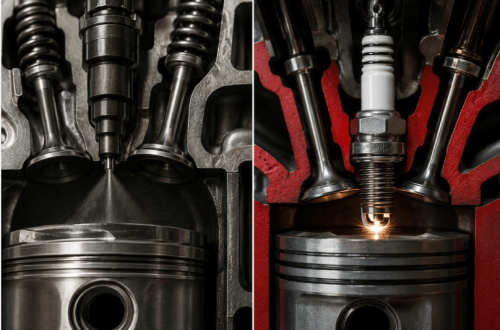








The Key Question: Do Diesel Engines Have Spark Plugs?
Many vehicle owners and new drivers often ask a simple but important question: Do diesel engines have spark plugs? The short answer is no, diesel engines do not use spark plugs to ignite fuel. Unlike gasoline engines, diesel engines rely on a completely different combustion process.
This difference creates confusion because both diesel and gasoline engines perform the same basic task: they convert fuel into power that moves a vehicle. Since gasoline engines depend on spark plugs for ignition, many people assume diesel engines work the same way. However, diesel technology follows a different principle.
Understanding whether diesel engines have spark plugs is important for vehicle maintenance, troubleshooting, repair costs, and buying decisions. Drivers who understand the difference between diesel and gasoline engines can make better choices regarding maintenance schedules, fuel efficiency, and long-term ownership costs.
In this article, we will explore how diesel engines work, why they do not need spark plugs, what components they use instead, and what owners should know to keep diesel vehicles running efficiently.
Understanding the Background of Diesel Engines
To understand why diesel engines do not use spark plugs, it is helpful to first examine how internal combustion engines operate.
An internal combustion engine generates power by burning a mixture of fuel and air inside cylinders. The resulting explosion pushes pistons, which turn the crankshaft and ultimately power the vehicle.
Although both gasoline and diesel engines follow this general principle, the method of igniting fuel differs significantly.
How Gasoline Engines Work
In a gasoline engine, the combustion process follows these steps:
- Air and gasoline enter the cylinder.
- The piston compresses the mixture.
- A spark plug creates an electrical spark.
- The spark ignites the fuel-air mixture.
- Combustion forces the piston downward.
- Power is delivered to the drivetrain.
Without spark plugs, a gasoline engine cannot normally start or operate because the fuel requires an external ignition source.
How Diesel Engines Work
A diesel engine follows a different approach.
Instead of compressing a fuel-air mixture, the engine first compresses only air inside the cylinder. The compression ratio is extremely high compared to a gasoline engine.
As the air becomes compressed, its temperature rises dramatically. Once the temperature reaches a sufficiently high level, diesel fuel is injected directly into the hot air.
The heat generated by compression causes the fuel to ignite automatically.
Because combustion occurs through heat rather than a spark, diesel engines do not require spark plugs.
This process is called compression ignition.
Why Diesel Engines Do Not Need Spark Plugs
The primary reason diesel engines do not use spark plugs is that diesel fuel ignites differently from gasoline.
Gasoline is designed to resist self-ignition during compression. Therefore, an external spark becomes necessary.
Diesel fuel behaves differently. When diesel fuel enters highly compressed hot air, it ignites naturally without any spark.
Several factors make this possible:
High Compression Ratios
Diesel engines typically operate with compression ratios between 14:1 and 25:1.
Gasoline engines often use ratios between 8:1 and 12:1.
The higher compression in a diesel engine creates temperatures that exceed the ignition point of diesel fuel.
Fuel Characteristics
Diesel fuel contains properties that make compression ignition possible. Once it encounters sufficient heat, combustion begins rapidly.
Engine Design
Manufacturers design diesel engines specifically around compression ignition principles. Consequently, spark plugs become unnecessary components.
As a result, diesel engines achieve reliable combustion without electrical sparks.
What Do Diesel Engines Use Instead of Spark Plugs?
Although diesel engines do not use spark plugs, many people notice another component called a glow plug.
This often leads to additional confusion.
Glow Plugs Explained
Glow plugs are heating devices installed in many diesel engines.
Unlike spark plugs, glow plugs do not create sparks.
Instead, they heat the combustion chamber during cold weather conditions.
When temperatures drop significantly, the air inside the cylinders may not become hot enough for easy ignition during startup. Glow plugs provide supplemental heat that helps start the engine.
Once the engine reaches operating temperature, glow plugs typically stop functioning.
Main Purpose of Glow Plugs
Glow plugs help:
- Improve cold-weather starting
- Reduce startup emissions
- Enhance combustion efficiency during startup
- Minimize engine roughness after ignition
Therefore, glow plugs support engine starting but do not ignite fuel the way spark plugs do.
Common Misconceptions About Diesel Engines
Many myths continue to circulate regarding diesel engines and spark plugs.
Understanding these misconceptions helps vehicle owners avoid confusion.
Myth 1: Diesel Engines Have Bigger Spark Plugs
This statement is incorrect.
Diesel engines do not use spark plugs at all. Some people mistakenly identify glow plugs as spark plugs because both components are installed in the engine cylinder head.
However, they serve completely different purposes.
Myth 2: Glow Plugs and Spark Plugs Are the Same
The two components operate differently.
Spark plugs generate electrical sparks repeatedly while the engine runs.
Glow plugs generate heat and usually assist only during startup.
Their functions, designs, and operating principles differ substantially.
Myth 3: All Diesel Engines Have Glow Plugs
Not every diesel engine relies on glow plugs.
Some modern diesel engines use advanced fuel injection systems and intake heaters instead.
Others may employ different cold-start technologies.
Therefore, the presence of glow plugs depends on engine design.
Myth 4: Diesel Engines Cannot Start Without Electricity
Diesel combustion itself does not require electrical sparks.
However, modern diesel vehicles still depend on electricity for components such as fuel pumps, engine control modules, sensors, and starter motors.
For this reason, a completely dead electrical system can prevent starting.
Advantages of Not Using Spark Plugs
The absence of spark plugs provides several benefits for diesel engines.
Reduced Maintenance
Spark plugs wear out over time and require replacement.
Since diesel engines do not use them, owners eliminate one routine maintenance item.
Improved Durability
Diesel engines are designed to withstand extremely high compression pressures.
This robust construction often contributes to longer engine life.
Better Fuel Efficiency
Compression ignition generally delivers higher thermal efficiency than spark ignition.
As a result, diesel engines often achieve superior fuel economy.
Strong Low-End Torque
Diesel engines produce substantial torque at lower engine speeds.
This characteristic makes them ideal for towing, hauling, and heavy-duty applications.
Potential Drawbacks of Diesel Engines
While diesel technology offers advantages, it also presents some challenges.
Higher Initial Cost
Diesel engines typically cost more to manufacture because they require stronger internal components.
Consequently, diesel vehicles often carry higher purchase prices.
More Expensive Repairs
Fuel injectors, turbochargers, and emissions systems can be costly to repair.
Although spark plug replacement is unnecessary, other maintenance expenses may arise.
Cold Weather Challenges
Starting can become more difficult in extremely cold environments.
For this reason, glow plugs and other cold-start systems remain important.
Emissions Equipment Complexity
Modern diesel engines include sophisticated emissions-control systems that require proper maintenance.
Failure to maintain these systems can lead to reduced performance and expensive repairs.
Maintenance Tips for Diesel Engine Owners
Since diesel engines do not use spark plugs, owners should focus on other critical maintenance areas.
Replace Fuel Filters Regularly
Clean fuel helps protect injectors and maintain proper combustion.
Monitor Glow Plug Performance
If cold starts become difficult, faulty glow plugs may be responsible.
Use Quality Diesel Fuel
High-quality fuel supports efficient combustion and reduces deposits.
Follow Manufacturer Service Intervals
Routine maintenance prevents costly breakdowns and extends engine life.
Check the Air Intake System
A clean air filter improves performance and fuel economy.
Inspect the Fuel Injection System
Proper fuel delivery remains essential for efficient diesel operation.
By following these recommendations, owners can maximize reliability and engine longevity.
Conclusion
So, do diesel engines have spark plugs? The answer is no. Diesel engines rely on compression ignition rather than spark ignition. Instead of using spark plugs to ignite fuel, they compress air to extremely high temperatures and then inject diesel fuel into the heated environment. The fuel ignites automatically, creating the power needed to operate the vehicle.
Although diesel engines do not use spark plugs, many employ glow plugs to assist with cold-weather starting. These components provide heat rather than sparks and serve a completely different purpose.
Understanding this distinction helps vehicle owners make informed maintenance decisions, diagnose problems more accurately, and appreciate the engineering differences between gasoline and diesel powerplants. Whether you drive a diesel truck, SUV, or commercial vehicle, knowing how compression ignition works can help you maintain your engine effectively and extend its lifespan.
FAQs
1. Do diesel engines use spark plugs?
No. Diesel engines use compression ignition instead of spark ignition, so spark plugs are not required.
2. What is the purpose of glow plugs in a diesel engine?
Glow plugs heat the combustion chamber during cold starts, helping the engine start more easily in low temperatures.
3. Can a diesel engine run without glow plugs?
Many diesel engines can run without glow plugs once they are warm. However, cold starting may become difficult if glow plugs fail.
4. Why does diesel fuel not need a spark to ignite?
Diesel fuel ignites when it is injected into highly compressed hot air inside the cylinder.
5. Are glow plugs the same as spark plugs?
No. Glow plugs generate heat, while spark plugs generate electrical sparks to ignite fuel.
6. Which engine is more fuel-efficient: diesel or gasoline?
Diesel engines are generally more fuel-efficient because compression ignition achieves higher thermal efficiency.
7. How often should glow plugs be replaced?
Replacement intervals vary by manufacturer and driving conditions, but glow plugs commonly last between 60,000 and 100,000 miles or more.