







The Key Question or Issue
Many drivers ask, “Do diesel engines have spark plugs?” This question often arises because gasoline and diesel engines may look similar from the outside. Both engines use pistons, cylinders, fuel injectors, and crankshafts. However, the way they ignite fuel is completely different.
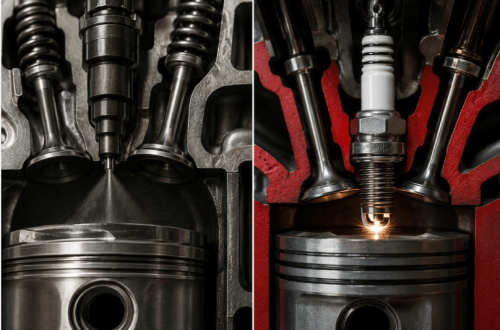
The simple answer is no. Diesel engines do not use spark plugs to ignite the fuel-air mixture. Instead, they rely on a process called compression ignition, where extremely high pressure raises the air temperature enough to ignite diesel fuel automatically.
Although diesel engines lack spark plugs, many people confuse them with glow plugs. Glow plugs are heating devices that help diesel engines start in cold weather. They do not create sparks, and they serve a different purpose than spark plugs found in gasoline engines.
Understanding this difference is important because it helps vehicle owners perform proper maintenance, diagnose engine problems, and avoid purchasing unnecessary replacement parts. Moreover, knowing how diesel engines operate makes it easier to understand why they are known for durability, fuel efficiency, and high torque.
Understanding the Difference Between Diesel and Gasoline Engines
To answer the question fully, it helps to understand how both engine types work.
Both gasoline and diesel engines convert fuel into mechanical energy. However, they ignite fuel differently. Consequently, their ignition systems have different components.
A gasoline engine mixes fuel and air before compression. Afterward, a spark plug creates an electric spark that ignites the mixture.
A diesel engine follows another process. First, it compresses only air inside the cylinder. As the air compresses, its temperature rises dramatically. Next, diesel fuel enters the hot compressed air through a fuel injector. The heat immediately ignites the fuel without requiring any spark.
Therefore, diesel engines do not need spark plugs.
What Is a Spark Plug?
A spark plug is an electrical component used in gasoline engines.
Its primary job is to create a controlled spark that ignites the compressed air-fuel mixture inside each cylinder.
Every spark plug consists of:
- A center electrode
- A ground electrode
- Ceramic insulation
- A threaded metal shell
During engine operation, high voltage travels from the ignition coil to the spark plug. The electricity jumps across the electrode gap and creates a spark. That spark starts combustion and powers the engine.
Without functioning spark plugs, gasoline engines cannot start or run properly.
Why Diesel Engines Do Not Need Spark Plugs
Diesel engines use compression ignition rather than spark ignition.
During the compression stroke, the piston squeezes air into a very small space. As a result, pressure increases significantly.
Because compressed air becomes extremely hot, temperatures often exceed 1,000°F (540°C).
When diesel fuel enters this hot air, it ignites instantly.
Since the engine generates enough heat naturally, spark plugs become unnecessary.
Furthermore, eliminating spark plugs reduces the number of ignition components that require maintenance.
What Are Glow Plugs?
Although diesel engines do not use spark plugs, many modern diesel vehicles include glow plugs.
Glow plugs are small electric heating elements installed in the cylinder head.
Unlike spark plugs, glow plugs never produce sparks.
Instead, they heat the combustion chamber before starting the engine.
This additional heat becomes especially useful during cold weather because cold air makes compression ignition more difficult.
Once the engine reaches operating temperature, the glow plugs usually switch off automatically.
Therefore, glow plugs assist with starting but play no role in normal combustion.
How Glow Plugs Work
The operation of glow plugs is straightforward.
When the ignition key turns or the start button is pressed, electricity flows to the glow plugs.
Within only a few seconds, they become extremely hot.
Meanwhile, the heated combustion chamber raises the temperature of the incoming air.
After the driver starts the engine, diesel fuel enters the cylinder and ignites more easily.
Consequently, cold starts become faster and smoother.
Modern diesel vehicles usually control glow plugs electronically, which improves efficiency and reduces unnecessary power consumption.
Benefits of Compression Ignition
Compression ignition offers several advantages over spark ignition.
Better Fuel Efficiency
Diesel engines convert more fuel into usable energy.
As a result, diesel vehicles usually travel farther on one tank of fuel.
Higher Torque
Diesel engines produce greater low-end torque.
Therefore, they perform exceptionally well when towing heavy trailers or carrying large loads.
Improved Durability
Because diesel engines feature stronger internal components, they often last longer than gasoline engines.
Many diesel engines exceed hundreds of thousands of miles with proper maintenance.
Lower Ignition Maintenance
Since spark plugs and ignition coils are absent, diesel engines have fewer ignition-related maintenance requirements.
Common Diesel Engine Components
Several components allow diesel engines to operate efficiently.
These include:
- Fuel injectors
- Glow plugs
- High-pressure fuel pump
- Turbocharger (on many models)
- Air filter
- Oil filter
- Engine control module
- Intercooler
- Pistons
- Crankshaft
Each component contributes to reliable combustion without requiring spark plugs.
Common Signs of Glow Plug Problems
Glow plugs wear over time.
Fortunately, several warning signs appear before complete failure.
These symptoms include:
- Difficulty starting in cold weather
- Rough idle immediately after startup
- White exhaust smoke
- Engine misfires during cold starts
- Illuminated glow plug warning light
- Reduced fuel efficiency
If these symptoms appear, inspect the glow plugs promptly.
Early replacement often prevents additional engine problems.
Do All Diesel Engines Have Glow Plugs?
No.
Some older diesel engines operate without glow plugs.
Instead, they rely on intake heaters, block heaters, or other cold-start systems.
However, most modern passenger diesel vehicles include glow plugs because they improve reliability during winter conditions.
Heavy-duty industrial engines sometimes use different starting technologies depending on their design and intended application.
Maintenance Tips for Diesel Engines
Proper maintenance helps diesel engines deliver excellent performance for many years.
First, replace fuel filters according to the manufacturer’s schedule.
Next, use high-quality diesel fuel whenever possible.
Additionally, change engine oil regularly using the recommended specification.
Moreover, inspect glow plugs before winter arrives.
Likewise, keep the battery fully charged because diesel engines require strong cranking power.
Finally, service the fuel injection system if starting problems develop.
Following these practices improves reliability and extends engine life.
Common Myths About Diesel Engines
Several myths continue to confuse vehicle owners.
Myth 1: Diesel Engines Have Spark Plugs
This statement is false.
Diesel engines ignite fuel through compression rather than electrical sparks.
Myth 2: Glow Plugs Replace Spark Plugs
Glow plugs do not replace spark plugs.
Instead, they simply warm the combustion chamber during cold starts.
Myth 3: Diesel Engines Never Need Maintenance
Diesel engines require regular maintenance just like gasoline engines.
Oil changes, fuel filter replacement, and injector maintenance remain essential.
Myth 4: Diesel Engines Cannot Start in Winter
Modern diesel engines start reliably in cold weather because glow plugs and electronic control systems assist the starting process.
Conclusion
So, do diesel engines have spark plugs? The answer is no. Diesel engines operate using compression ignition instead of spark ignition. High compression heats the air inside each cylinder until diesel fuel ignites naturally. Consequently, spark plugs are unnecessary.
Many diesel engines use glow plugs, but these components should not be confused with spark plugs. Glow plugs simply help warm the combustion chamber during cold starts and improve starting performance.
Understanding this difference helps drivers maintain their vehicles correctly, diagnose engine issues more accurately, and appreciate the engineering behind diesel technology. Furthermore, proper maintenance, regular inspections, and high-quality fuel will help any diesel engine deliver dependable performance for many years.
Frequently Asked Questions (FAQs)
1. Do diesel engines have spark plugs?
No. Diesel engines do not use spark plugs because they ignite fuel through high compression instead of an electrical spark.
2. What do diesel engines use instead of spark plugs?
Most diesel engines use glow plugs to help with cold starts. However, glow plugs do not ignite the fuel.
3. What is the difference between a glow plug and a spark plug?
A spark plug creates an electric spark to ignite fuel in gasoline engines. In contrast, a glow plug heats the combustion chamber to assist diesel engine starting.
4. Can a diesel engine run without glow plugs?
Yes, many diesel engines can run without glow plugs once they are warm. However, starting in cold weather becomes much more difficult.
5. Why are diesel engines more fuel-efficient than gasoline engines?
Diesel engines use higher compression ratios and extract more energy from fuel, resulting in better fuel economy.
6. How often should glow plugs be replaced?
Glow plugs typically last between 60,000 and 100,000 miles, although replacement intervals vary by vehicle and driving conditions.
7. Are diesel engines more reliable than gasoline engines?
Diesel engines are generally very durable because they use stronger internal components and operate at lower engine speeds. Proper maintenance, however, remains essential for long-term reliability.