





Introduction: The Key Question or Issue
Car seats experience daily wear and tear, making stains almost impossible to avoid. Coffee spills during the morning commute, food dropped by children, muddy footprints, ink marks, pet accidents, and grease can quickly make a clean interior look neglected. As a result, many car owners ask the same question: How do you get stains out of seats in a car without damaging the fabric or leather?
The answer depends on the type of seat material, the kind of stain, and how quickly you act. Fresh stains are usually easier to remove than old, set-in stains. Fortunately, most stains can be cleaned successfully with the right tools and techniques.
Keeping your car seats clean is about more than appearance. Clean seats improve comfort, reduce odors, help maintain your vehicle’s resale value, and create a healthier environment for passengers. Whether your vehicle has cloth, leather, or vinyl seats, understanding proper cleaning methods can save both time and money.
This guide explains everything you need to know about removing stains from car seats. Additionally, it covers the causes of common stains, the best cleaning solutions, preventive measures, and maintenance tips to keep your interior looking like new.
Understanding Car Seat Stains: Context and Background
Before cleaning a stain, it helps to understand why stains occur and how different materials react to cleaning products.
Types of Car Seat Materials
Different seat materials require different cleaning methods.
Cloth Seats
Cloth seats are comfortable and affordable. However, they absorb liquids quickly, making stains harder to remove if left untreated.
Leather Seats
Leather seats provide a premium appearance and resist many stains better than cloth. Nevertheless, harsh chemicals can dry out or crack the leather if used incorrectly.
Vinyl Seats
Vinyl seats resist moisture well and are relatively easy to clean. Even so, abrasive cleaners may damage their protective finish.
Common Types of Car Seat Stains
Several everyday substances can stain car seats.
These include:
- Coffee and tea
- Soft drinks
- Juice
- Grease
- Chocolate
- Mud
- Ink
- Makeup
- Pet accidents
- Blood
- Sweat
- Food sauces
Each stain responds differently to cleaning products. Therefore, identifying the stain before cleaning improves your chances of complete removal.
Why Immediate Cleaning Matters
Fresh stains remain on the surface for a short time before soaking into the seat material.
If you clean a spill immediately, you can often remove it completely. However, stains that remain untreated for days or weeks become much more difficult to eliminate.
Furthermore, untreated spills may produce unpleasant odors or encourage mold growth in humid conditions.
Step-by-Step Solutions: How to Get Stains Out of Seats in a Car
Fortunately, removing most car seat stains follows a straightforward process.
Step 1: Gather Cleaning Supplies
Before you begin, collect the following items:
- Microfiber cloths
- Soft-bristle brush
- Vacuum cleaner
- Spray bottle
- Warm water
- Mild dish soap
- White vinegar
- Baking soda
- Upholstery cleaner
- Leather cleaner (for leather seats)
Having everything ready makes the cleaning process easier and more effective.
Step 2: Vacuum the Seats
First, vacuum the seats thoroughly.
Removing dirt, crumbs, and loose debris prevents rubbing these particles deeper into the fabric during cleaning.
Pay special attention to:
- Seat seams
- Creases
- Corners
- Under the cushions
After vacuuming, inspect the stain carefully.
Step 3: Identify the Stain
Different stains require different treatments.
For example:
- Coffee stains respond well to mild soap.
- Grease requires a degreasing cleaner.
- Ink often needs rubbing alcohol.
- Pet stains benefit from enzyme cleaners.
Consequently, choosing the correct cleaner increases the likelihood of success.
Step 4: Test the Cleaner First
Before applying any product across the entire stain, test it on a hidden section of the seat.
This precaution helps ensure that the cleaner will not discolor or damage the material.
If the test area looks normal after drying, proceed with cleaning.
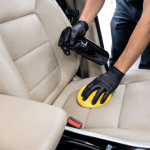
Step 5: Clean Cloth Seats
For cloth upholstery, mix warm water with a few drops of mild dish soap.
Next, lightly spray the solution onto the stained area.
Then gently scrub using a soft brush in circular motions.
Avoid soaking the fabric because excessive moisture may encourage mold growth.
Afterward, blot the area with a clean microfiber cloth instead of rubbing it.
Finally, allow the seat to air dry completely.
Step 6: Clean Leather Seats
Leather requires extra care.
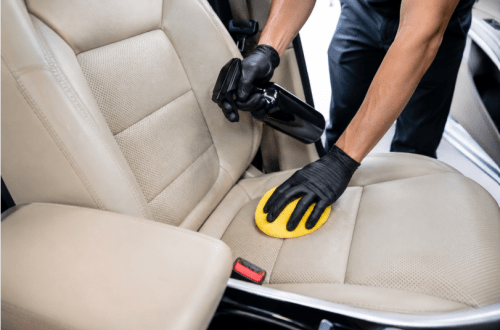
Apply a leather cleaner to a microfiber cloth rather than spraying it directly onto the seat.
Next, wipe the stained area gently.
Then remove excess cleaner using another clean cloth.
After cleaning, apply a leather conditioner to restore moisture and prevent cracking.
Regular conditioning also extends the life of leather upholstery.
Step 7: Clean Vinyl Seats
Vinyl seats usually require less effort.
Mix mild soap with warm water.
Afterward, wipe the stain gently using a soft cloth.
If necessary, repeat the process until the stain disappears.
Avoid abrasive pads because they may scratch the surface.
Removing Specific Types of Stains
Different stains often require specialized treatment.
Coffee Stains
Blot fresh coffee immediately.
Then clean the area with warm water and mild soap.
If the stain remains, use a mixture of equal parts vinegar and water.
Grease Stains
Sprinkle baking soda over the grease.
Allow it to sit for fifteen minutes.
Next, vacuum the powder.
Then clean the remaining residue using dish soap.
Ink Stains
Apply a small amount of rubbing alcohol to a cotton swab.
Gently dab the ink.
Avoid rubbing because the stain may spread.
Repeat until the ink lifts.
Blood Stains
Always use cold water for blood stains.
Hot water may permanently set the stain.
After applying cold water, gently blot with a clean cloth.
Repeat until the stain fades.
Pet Stains
First, blot any moisture.
Then use an enzyme-based cleaner designed for pet accidents.
These products break down odor-causing bacteria while removing stains.
Mud Stains
Allow mud to dry completely.
Next, vacuum loose dirt.
Then clean the remaining stain using mild soap and water.
Dry mud is much easier to remove than wet mud.
Natural Cleaning Solutions
Many household ingredients work surprisingly well.
White Vinegar
White vinegar helps remove odors and light stains.
Mix equal parts vinegar and water before applying.
Baking Soda
Baking soda absorbs moisture and neutralizes odors.
Sprinkle it over the stain, leave it for thirty minutes, and vacuum thoroughly.
Mild Dish Soap
Dish soap removes many food and beverage stains safely.
However, avoid using too much because soap residue attracts dirt.
Mistakes to Avoid
Cleaning mistakes can make stains worse.
Avoid these common errors:
- Scrubbing aggressively
- Using bleach
- Soaking cloth seats
- Mixing strong chemicals
- Ignoring manufacturer recommendations
- Drying seats with excessive heat
Instead, work gently and patiently.
As a result, you reduce the risk of damaging the upholstery.
Preventing Future Car Seat Stains
Although stains cannot always be avoided, prevention makes cleaning much easier.
You can protect your seats by following these tips:
- Vacuum weekly.
- Clean spills immediately.
- Use seat covers.
- Avoid eating inside the vehicle whenever possible.
- Keep cleaning wipes in the glove box.
- Condition leather seats every few months.
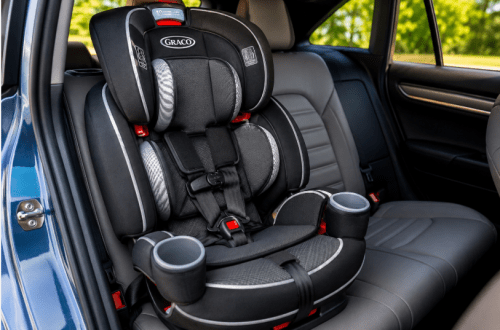
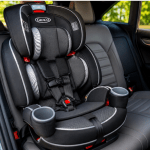
- Place waterproof covers under child safety seats.
- Brush off muddy clothing before entering the vehicle.
Additionally, scheduling a deep interior cleaning every few months helps maintain a fresh appearance.
When Professional Cleaning Is the Best Option
Some stains prove difficult to remove at home.
Professional detailing may be the better choice if:
- The stain covers a large area.
- Mold has developed.
- Strong odors remain.
- Leather has become discolored.
- DIY cleaning attempts have failed.
Professional cleaners use specialized equipment capable of removing stubborn stains while protecting the upholstery.
Conclusion
Learning how to get stains out of seats in a car can help you maintain a cleaner, healthier, and more valuable vehicle. Fortunately, most stains respond well to prompt action and the proper cleaning methods. Whether your seats are cloth, leather, or vinyl, using suitable products and gentle techniques makes a significant difference.
Moreover, regular maintenance prevents dirt from becoming permanent and reduces the need for expensive professional cleaning. By vacuuming frequently, treating spills immediately, and using protective seat covers, you can keep your car interior looking its best for years. Ultimately, consistent care is the easiest way to preserve both comfort and resale value.
Frequently Asked Questions (FAQs)
1. What is the best way to remove stains from cloth car seats?
Vacuum the seat first, apply a mild soap and water solution, gently scrub with a soft brush, blot with a microfiber cloth, and allow the seat to air dry.
2. Can baking soda remove car seat stains?
Yes. Baking soda helps absorb grease, moisture, and odors. It works especially well when combined with regular cleaning methods.
3. Is vinegar safe for cleaning car seats?
Yes, diluted white vinegar is generally safe for cloth seats and helps remove light stains and odors. However, avoid using vinegar on leather seats.
4. How do I remove old stains from car seats?
Use an upholstery cleaner designed for automotive interiors, allow it to penetrate the stain, gently scrub, and repeat the process if necessary.
5. Can I use household cleaners on leather seats?
Only cleaners specifically made for leather should be used. Harsh household chemicals may dry out or damage the leather.
6. How often should I clean my car seats?
Vacuum the seats weekly and perform a deep cleaning every three to six months or whenever spills occur.
7. When should I hire a professional detailer?
Professional detailing is recommended for stubborn stains, mold, severe odors, or delicate leather that requires specialized care.