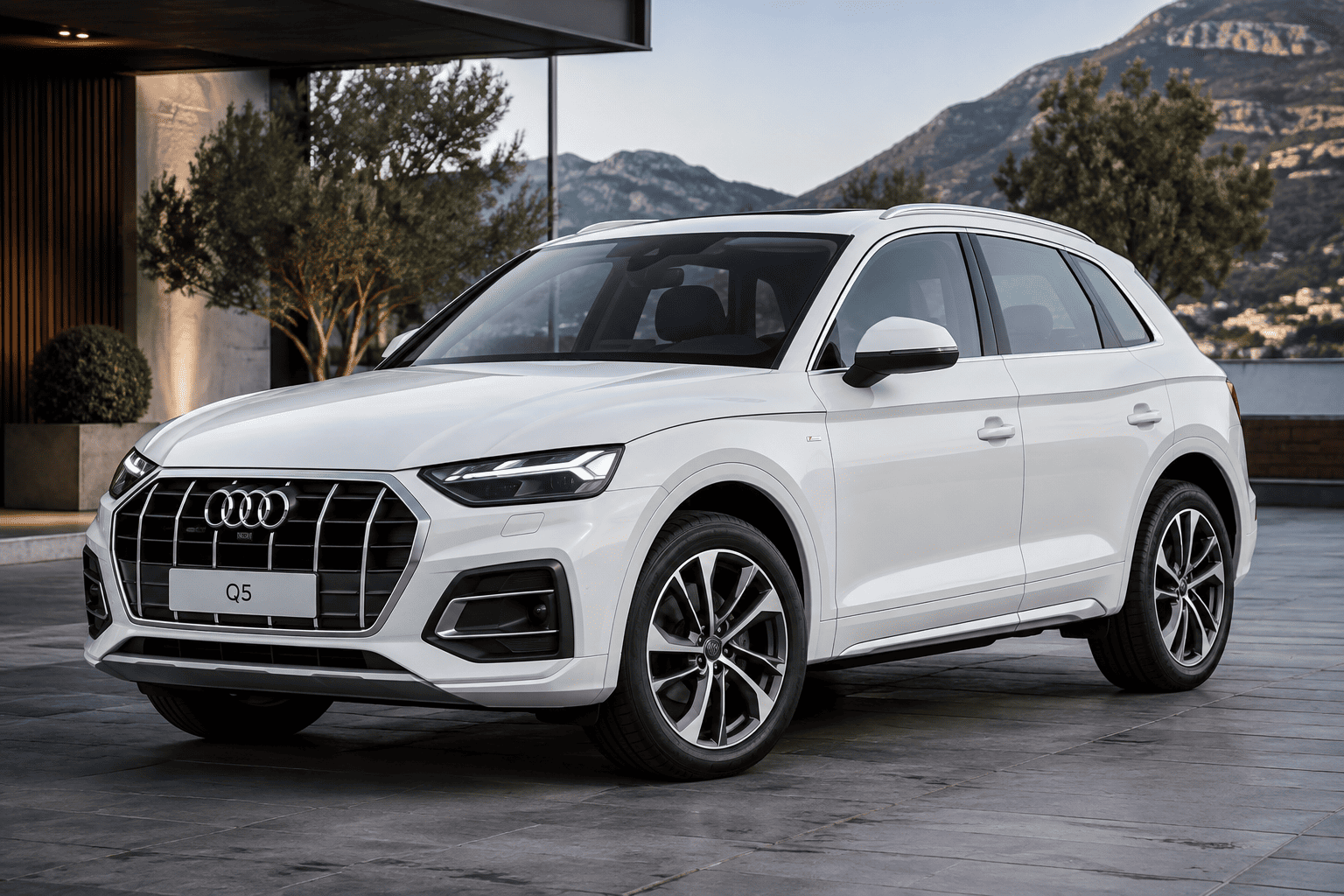





The automotive industry is a complex web of corporate partnerships, mergers, and parent companies. If you have ever compared a Volkswagen Golf to an Audi A3, you might have noticed some striking similarities beneath the surface—from the engine options to the platform architecture. This raises a common question for car buyers and automotive enthusiasts alike: Does Volkswagen own Audi?
The short answer is yes. Volkswagen Group owns Audi. However, the relationship between these two German automotive giants is much more nuanced than a simple parent-subsidiary dynamic. It is a partnership built on shared technology, distinct brand positioning, and a corporate history that reshaped the global car market.
This comprehensive guide breaks down the ownership structure, the history behind the acquisition, how the brands share technology, and what this corporate relationship means for drivers today.
The Ownership Structure: Who Controls Audi?
Volkswagen Group (officially known as Volkswagen Aktiengesellschaft or VW AG) is one of the largest automakers in the world. It operates as a massive parent company that oversees a diverse portfolio of vehicle brands.
Audi is not just a subsidiary; it is a core pillar of the Volkswagen Group’s premium segment. Volkswagen officially owns 100% of Audi.
The Squeeze-Out of 2020
For decades, Volkswagen held a massive majority stake in Audi—roughly 99.64%. The remaining fraction of a percent belonged to private, minority shareholders, and Audi traded independently on the German stock market.
However, in 2020, Volkswagen Group executed a legal “squeeze-out” under German stock corporation law. VW purchased the remaining 0.36% of shares from minority shareholders at a premium. This move effectively privatized Audi, delisted it from the stock exchange, and gave Volkswagen absolute, 100% control over the brand.
Where Audi Fits in the Volkswagen Empire
Volkswagen Group divides its brands into distinct corporate clusters to manage its massive portfolio efficiently. Audi leads the Brand Group Progressive, a segment dedicated to premium and high-performance luxury.
To understand the sheer scale of Volkswagen’s empire, look at how the entire portfolio is structured:
| Brand Cluster | Core Target Market | Key Brands Included |
| Core | Mainstream & Volume | Volkswagen, SEAT, Škoda, Cupra |
| Progressive | Premium & Luxury | Audi, Bentley, Lamborghini, Ducati |
| Sport | Elite Performance | Porsche |
| Trucks & Commercial | Heavy Logistics | Scania, MAN, Navistar (TRATON Group) |
A Brief History of How VW Acquired Audi
The story of how Audi became part of the Volkswagen Group is a tale of post-war survival, corporate reinvention, and a hidden engine that changed everything.
1. The Roots of Auto Union
Audi’s origins trace back to a company called Auto Union, formed in 1932 during the Great Depression. Four independent German automakers—Audi, DKW, Horch, and Wanderer—merged to survive economic hardship. This merger created the iconic four-ring logo that Audi still proudly wears today, with each ring representing one of the founding companies.
2. The Mercedes-Benz Era
After World War II, Auto Union struggled to find its footing. In 1958, rival luxury automaker Daimler-Benz (the parent company of Mercedes-Benz) acquired an 87% stake in Auto Union, eventually taking full ownership. Under Mercedes, Auto Union developed a modern, water-cooled four-cylinder engine. However, Mercedes did not see a long-term future for the struggling brand.
3. Volkswagen Steps In (1964–1966)
In 1964, Volkswagen purchased a 50% stake in Auto Union from Mercedes-Benz, acquiring the factory in Ingolstadt, Germany, and the rights to the new four-cylinder engine. By 1966, Volkswagen assumed full financial control.
Initially, VW leadership did not want Auto Union developing new cars. They intended to use the Ingolstadt factory capacity solely to build the wildly popular Volkswagen Beetle.
4. The Secret Car That Saved Audi
Volkswagen leadership strictly forbade Auto Union engineers from designing independent vehicles. Despite this ban, Ludwig Kraus, Auto Union’s chief engineer, secretly developed a new car in private.
When Kraus finally showed the completed prototype to VW Chief Executive Heinrich Nordhoff, Nordhoff was so impressed that he authorized its production. That secret car debuted in 1968 as the Audi 100. It became a massive commercial success, revived the Audi nameplate, and convinced Volkswagen to let Audi grow as a premium, standalone brand.
Platform Sharing: The Secret Under the Hood
The most significant benefit of Volkswagen’s ownership of Audi is economic efficiency. Developing a new vehicle platform from scratch costs billions of dollars. By sharing platforms, engines, and technology across different brands, Volkswagen Group saves massive amounts of money.
This practice is called platform sharing. While an Audi and a Volkswagen look entirely different from the outside, they often share the same skeleton, suspension components, and powertrains.
The MQB Platform (Transverse Engines)
The MQB platform (Modularer Querbaukasten) handles vehicles with transverse engines (where the engine sits sideways in the engine bay). This architecture underpins dozens of front-wheel-drive and all-wheel-drive vehicles across the VW group.
If you drive an Audi A3 or an Audi Q3, your car rides on the exact same structural platform as a Volkswagen Golf, a Volkswagen Jetta, or a Volkswagen Tiguan.
The MLB Platform (Longitudinal Engines)
For its larger, more luxurious vehicles, Audi uses the MLB platform (Modularer Längsbaukasten). This setup places the engine longitudinally (pointing front-to-back), which allows for better weight distribution and accommodates larger engines.
The MLB platform highlights the incredible range of the VW Group. The Audi A4, A6, and Q7 share their structural DNA not just with higher-end Volkswagens (like the Touareg), but also with ultra-luxury corporate siblings like the Porsche Cayenne, the Lamborghini Urus, and the Bentley Bentayga.
Synergy vs. Differentiation: Why Audi is Still a True Luxury Brand
Because Volkswagen and Audi share so much technology, a common criticism arises: Is an Audi just a more expensive Volkswagen?
While they share mechanical components, Audi operates with a high degree of independence. Volkswagen spends significant resources ensuring that Audi looks, feels, and drives like a distinct luxury vehicle.
Audi maintains its premium status through several key differentiators:
Quattro All-Wheel Drive: While Volkswagen uses an all-wheel-drive system called 4Motion, Audi’s legendary Quattro systems are tuned specifically for performance, utilizing mechanical differentials in larger models to provide a rear-biased, sporty driving experience.
Material Quality and Craftsmanship: Audi cabins feature premium materials, including authentic carbon fiber, open-pore wood, and high-grade Nappa leather. Noise insulation is significantly more robust in an Audi, creating a quieter, more isolated ride than a standard VW.
Advanced Electronics: Audi pioneered the Virtual Cockpit, a highly customizable digital instrument cluster. Audi vehicles also receive cutting-edge laser headlights, advanced driver-assistance systems, and matrix LED lighting technology long before these features trickle down to mainstream Volkswagen models.
Engine Tuning: Even when an Audi and a VW share the same 2.0-liter turbocharged four-cylinder engine, Audi engineers tune the engine and transmission maps differently. Audis typically deliver power more aggressively and feature sharper, more precise steering dynamics.
The Electric Future: The Premium Platform Electric (PPE)
As the automotive industry transitions to electric vehicles (EVs), the relationship between Volkswagen and Audi is evolving. The shared platform strategy continues, but it has shifted toward advanced battery electric architectures.
Audi and Porsche jointly developed the Premium Platform Electric (PPE). This architecture features an 800-volt electrical system, enabling ultra-fast charging speeds that can replenish a battery from 5% to 80% in under 22 minutes.
Vehicles like the Audi Q6 e-tron use this PPE architecture. By sharing development costs with Porsche, Audi can offer elite EV performance, while Volkswagen focuses on the more affordable, mass-market MEB electric platform for vehicles like the ID.4.
Final Thoughts: The Benefits of Corporate Brotherhood
Volkswagen’s ownership of Audi is one of the most successful corporate marriages in automotive history. Without Volkswagen’s financial backing in the 1960s, the Audi brand likely would have faded into history. Instead, Audi grew into a global luxury powerhouse.
For the consumer, this corporate relationship offers the best of both worlds. Audi buyers get the benefit of Volkswagen’s massive economies of scale, which ensures reliable parts availability, proven powertrain reliability, and immense engineering resources. At the same time, Audi retains the design independence, performance heritage, and luxury craftsmanship that drivers expect from a premium German automobile.