







When you see a luxury vehicle pass by with its signature split grille, you instantly recognize the brand. However, very few drivers know the actual words behind those three famous letters.
BMW stands for Bayerische Motoren Werke.
If you translate this phrase from its original German into English, it means Bavarian Motor Works. This complete guide explores the historical origins of the name. We will unpack the hidden meaning behind the iconic logo and trace the company’s evolution from building aircraft engines to creating the “Ultimate Driving Machine.”
The Literal Meaning of Bayerische Motoren Werke
To truly understand the name, you have to break it down into its three core German components. Each word anchors the brand to its historical identity.
1. Bayerische (Bavarian)
This word signifies the place of birth. Bavaria is the largest state in Germany, located in the southeast region of the country. Munich, the capital of Bavaria, serves as the global headquarters for the automotive giant today. The region is known for its distinct culture, engineering talent, and industrial prowess.
2. Motoren (Motor / Engine)
Before cars ever rolled off the assembly line, engines were the core product. The founders built a reputation on high-performance propulsion systems. This focus on the heart of the machine remains central to the brand identity today.
3. Werke (Works / Factory)
This traditional German industrial term translates to “works” or “factories.” It reflects the manufacturing facilities where designers turned blueprints into physical reality.
How to Pronounce BMW in German
Most English speakers simply pronounce the letters as “Bee-Em-Double-U.” If you want to say it like a true native in Germany, the pronunciation shifts significantly.
In the German alphabet, the letter W sounds like an English V. Therefore, a local resident pronounces the acronym as “Bee-Em-Vee.”
The Origin Story: From Aircraft to Automobiles
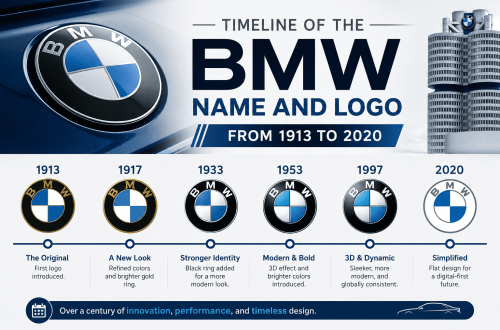
The roots of the brand date back to 1913. An engineer named Karl Rapp established Rapp Motorenwerke, an aircraft engine manufacturing company based in Munich. At the time, aviation technology was expanding rapidly across Europe.
The company underwent a series of structural shifts during World War I. Karl Rapp departed the firm in 1917. Following his exit, the business received a new designation: Bayerische Motoren Werke GmbH.
[1913: Rapp Motorenwerke] ➔ [1917: Bayerische Motoren Werke] ➔ [1918: Public Stock Corporation]
The company quickly transitioned into a public stock corporation (AG) in 1918. However, the end of the war brought a massive roadblock. The Treaty of Versailles banned Germany from manufacturing aircraft engines.
To survive, the engineers had to pivot. The factory shifted its production lines to build railway brakes, farm tractors, and small motorized bicycles.
Entering the Two-Wheel Market
The company introduced its first motorcycle, the BMW R 32, in 1923. The motorcycle design achieved massive success. It featured an innovative boxer engine that improved cooling and reliability. This success saved the firm from financial ruin.
The First Passenger Car
Automobile production finally began in 1928. The company purchased a manufacturing plant in Eisenach, Germany. Along with the facility, they acquired the rights to build a tiny vehicle called the Dixi 3/15. The engineering team upgraded the vehicle, rebranded it as the BMW 3/15, and officially entered the global automotive market.
The History of the Logo: Myth vs. Reality
The circular emblem ranks among the most recognized corporate trademarks in modern history. For decades, a specific story about its design circulated among car enthusiasts.
The Airplane Propeller Myth
Many people believe that the logo represents a spinning airplane propeller. According to this narrative, the white quadrants represent flashing blades, while the blue sections represent the open sky.
This story is actually a myth. The misunderstanding stems from a 1929 magazine advertisement. The ad featured an image of airplanes with the corporate letters superimposed onto the spinning propellers. The company used this imagery to promote its aviation heritage, but the graphic design already existed long before the ad ran.
The True Origin: Bavarian National Identity
The true design blends two distinct historical elements:
The Outer Ring: The original shape borrowed its black circular border from the old Rapp Motorenwerke logo. The design team placed the three state letters inside this black ring.
The Inner Colors: The blue and white quadrants represent the official state colors of Bavaria. However, local trademark laws at the time prohibited companies from using official state coats of arms in commercial logos. The designers solved this issue by reversing the order of the colors within the quarters.
Key Milestones in the Brand’s Evolution
| Era | Key Milestones and Historic Events |
| 1910s | Established the name; set a world altitude record of 32,000 feet with an aircraft engine. |
| 1920s | Launched the R 32 motorcycle; acquired the Eisenach factory to begin car manufacturing. |
| 1930s | Manufactured the legendary 328 sports car, which dominated European racing events. |
| 1950s | Faced severe financial trouble; saved by the Isetta microcar and a major investment from the Quandt family. |
| 1960s | Introduced the “New Class” sedan series, creating the modern sport sedan category. |
| 1970s | Formed the high-performance M Division; launched the iconic 3 Series, 5 Series, and 7 Series. |
| 2000s | Expanded the global lineup with SUV models (X5) and acquired the Mini and Rolls-Royce brands. |
What Does the “M” Stand For in Performance Models?
If you see a vehicle featuring a bright emblem with three colored stripes, you are looking at a premium performance machine.
The letter M stands for Motorsport.
The company founded its specialized racing division, BMW Motorsport GmbH, in 1972. The group originally managed the corporate racing programs, which achieved dominant victories on tracks across the globe. Eventually, the engineers began modifying standard passenger vehicles with track-ready technology.
[Motorsport Division Founded: 1972] ➔ [First M1 Supercar: 1978] ➔ [Iconic E30 M3 Released: 1986]
The iconic three stripes carry specific meanings:
Blue: Represents the core brand identity.
Red: Represents the spirit of racing and early motorsport partnerships.
Purple/Violet: Represents the literal blend of blue and red, symbolizing the connection between the road cars and the racing track. (This color updated to dark blue in recent marketing designs).
What Does “Bimmer” vs. “Beemer” Mean?
Car communities use distinct nicknames for these vehicles. Though they sound almost identical, true enthusiasts use them for completely separate products.
Beemer (or Beamer): This term applies exclusively to motorcycles. The nickname originated in Great Britain during the 1960s to distinguish the brand’s bikes from rival BSA motorcycles, which fans called “Beezas.”
Bimmer: This term applies exclusively to cars. American enthusiasts coined the term in the 1970s. During that era, drivers wanted a distinct name to separate the high-performance sports cars from the two-wheel models.
Modern Nomenclature: Understanding the Model Numbers
The company uses a structured numbering system to organize its modern vehicle lineup. Once you understand the basic formula, you can decode the specifications of almost any model on the road.
Most vehicle names follow a clear three-digit pattern:
1. The Core Series (First Digit)
The first number represents the relative size and class of the vehicle chassis.
Odd Numbers (3, 5, 7): Reserved for traditional, practical body styles like four-door sedans, station wagons, and luxury cruisers.
Even Numbers (2, 4, 8): Reserved for sportier body shapes, including two-door coupes, convertibles, and sleek fastbacks.
2. The Engine Displace / Performance (Next Two Digits)
Historically, these numbers indicated the actual engine displacement size in liters. For example, a 325i featured a 2.5-liter engine. Today, turbocharging and electric hybrid systems have changed this approach. The numbers now indicate a virtual performance tier. A higher number simply means more power under the hood.
3. The Letter Suffixes
The lowercase letters at the end of a model name reveal the specific drivetrain fuel type or mechanical setup:
i: Stands for Injected (Gasoline engines with fuel injection systems).
d: Stands for Diesel powerplants.
e: Stands for Efficiency (Plug-in hybrid electric vehicles).
xDrive: Indicates the proprietary intelligent all-wheel-drive system.
sDrive: Indicates a two-wheel-drive system (typically rear-wheel drive).
Looking to the Future: The “i” Brand
As global transportation shifts away from fossil fuels, the manufacturing factories have adapted once again. The company launched its dedicated BMW i sub-brand to pioneer zero-emission electric vehicles.
In this context, the i does not mean injection. Instead, it stands for Innovation and Intelligence. Models like the i4 sedan and the iX SUV demonstrate how the historical Bavarian factory continues to redefine its corporate name for a modern, electrified world.
Frequently Asked Questions
Is BMW a German or British company?
The company is entirely German. The corporate headquarters, main assembly plants, and executive leadership operate out of Munich, Germany. However, the corporate group does own two famous British brands: Mini and Rolls-Royce.
Why is the company called Bavarian?
The company uses this name because its original factories were founded within the German state of Bavaria. The brand remains deeply proud of its regional identity, which influences its culture and logo design.
What was the first car built by the company?
The very first passenger automobile was the 3/15 DA-1, which hit the market in 1929. The vehicle was an evolved version of the British Austin Seven design.