








Imagine rushing out the door, turning your car key, and hearing nothing but a gut-wrenching click. A dead car battery is a universal frustration, yet most drivers neglect this crucial component until it fails completely.
Understanding your vehicle’s electrical heart can save you money, prevent roadside headaches, and extend your car’s overall lifespan. This comprehensive guide breaks down everything you need to know about car battery longevity, warning signs, and maintenance.
1. The Short Answer: Average Lifespan of a Car Battery
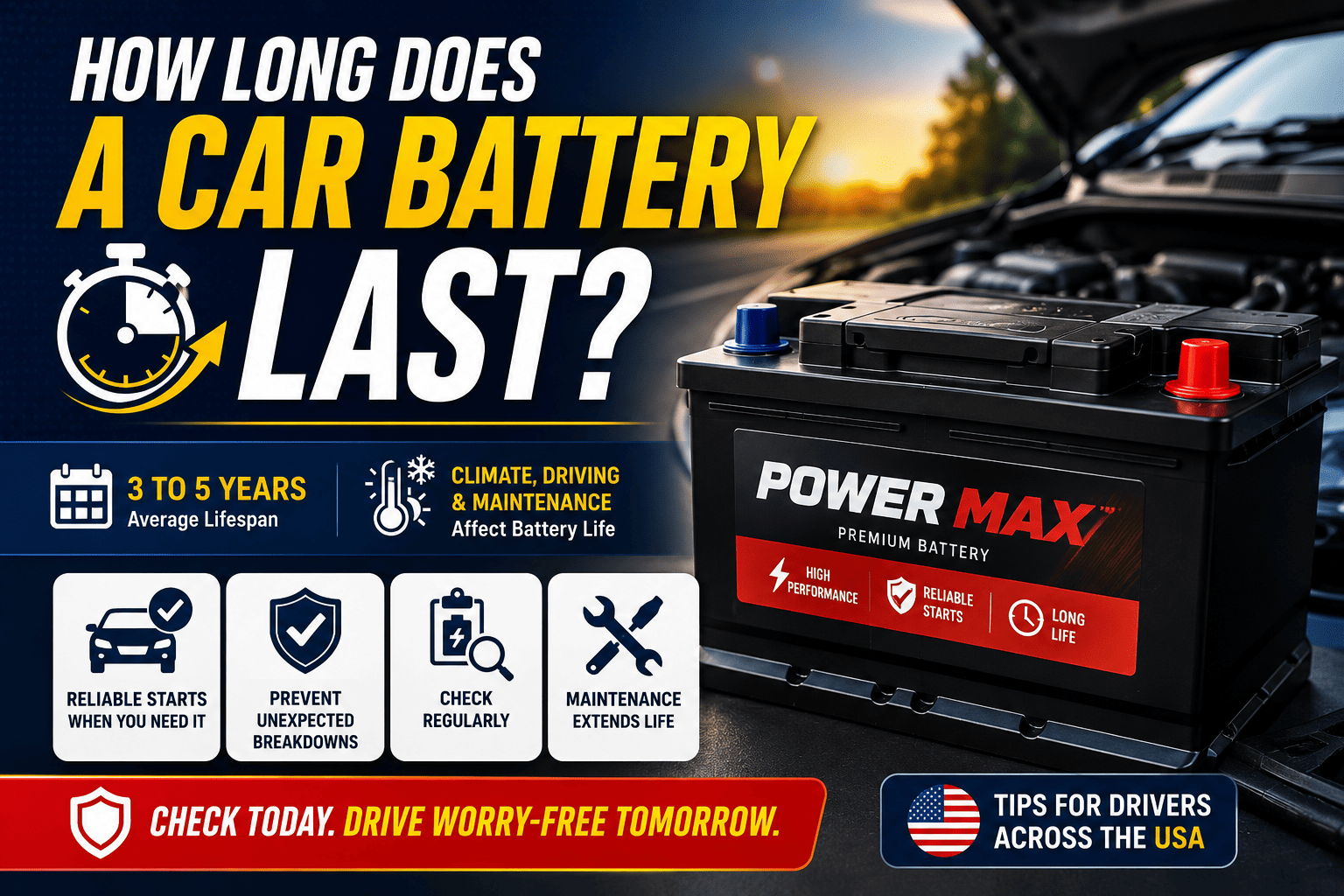
Under typical operating conditions, a standard car battery lasts between 3 to 5 years.
However, “typical” is a flexible term. A battery in a vehicle driven daily in moderate climates will comfortably cross the 4-year mark. Conversely, a battery subjected to extreme conditions or short, infrequent trips might give up the ghost in fewer than 3 years.
Factory vs. Replacement Batteries
The battery that comes fresh out of the factory with a new car often lasts longer—sometimes up to 6 years. This longevity happens because the entire electrical system is pristine, and the original alternator works flawlessly. Replacement batteries, while high in quality, operate in an aging electrical environment, meaning they usually hit the 3-to-4-year average.
2. Crucial Factors That Determine Battery Life
Batteries do not just die; they are worn down by environment, habits, and mechanics. Five primary factors dictate how long your battery survives.
Extreme Temperatures
Temperature is the ultimate factor in battery health. Many drivers assume winter is the enemy because cold engines require more cranking power. However, summer heat is the true silent killer.
High ambient temperatures accelerate chemical reactions inside the lead-acid battery, causing internal corrosion and vaporizing the vital liquid electrolyte. The damage occurs in July, but the battery finally collapses during the first hard freeze of December.
Driving Habits
Your alternator needs time to recharge your battery after the starter motor draws a massive amount of current to turn over the engine.
Short Trips (<15 minutes): Constant short drives prevent the alternator from fully restoring the lost charge. Your battery remains in a perpetual state of undercharge, leading to acid stratification and permanent capacity loss.
Infrequent Use: Cars draw a tiny amount of electricity even when parked to power computers and alarm systems. Leaving a car sitting for weeks draws down the battery, causing permanent damage.
Vehicle Electrical Load
Modern vehicles are mobile computers. Dashcams, heated seats, infotainment systems, GPS arrays, and advanced driver-assistance systems (ADAS) put immense pressure on the electrical grid. If you charge multiple devices or run aftermarket audio gear, your battery works harder during every single drive.
The Alternator and Charging System
A battery is only as good as the system charging it. If your alternator has a failing diode or a worn belt, it will undercharge the battery, draining its reserves. Conversely, a malfunctioning voltage regulator can overcharge the battery, literally boiling the internal fluid and ruining the plates.
3. Different Types of Car Batteries and Their Longevity
Not all batteries feature the same internal chemistry. The type of battery under your hood changes its expected lifespan and replacement cost.
4. Warning Signs Your Car Battery is Failing
Batteries rarely fail without dropping subtle hints first. Spotting these signs early prevents you from getting stranded in a dark parking lot.
The Slow Engine Crank
When you turn the key or push the start button, does the engine sound sluggish? A sluggish “rur-rur-rur” sound indicates the battery lacks the cranking amps required to quickly spin the starter motor.
Dimming Headlights and Electrical Glitches
If your headlights look yellow and dim at idle but brighten when you rev the engine, your battery is struggling to hold a stable voltage. You might also notice power windows rolling up slower than usual or the infotainment screen resetting randomly.
The Dashboard Warning Light
The illuminated battery symbol on your dashboard does not always mean a dead battery; it signifies a general charging system failure. It triggers when system voltage drops below a functional threshold.
Bloated Battery Case
Pop your hood and inspect the physical battery casing. If the plastic sides swell outward like a bloated can of soda, extreme heat or overcharging has compromised the internal cells. A swollen battery requires immediate replacement; it poses an explosion risk.
The “Rotten Egg” Odor
A distinct sulfur smell around the hood indicates your battery is venting gas. This outgassing occurs when a battery is overcharged or suffers an internal short circuit, boiling the sulfuric acid inside.
5. How to Test Your Car Battery at Home
You do not need a professional mechanic to check your battery health. A simple digital multimeter provides instant clarity.
The Multimeter Test Step-by-Step
Turn off your vehicle’s engine, lights, and all accessories.
Set your digital multimeter to 20V DC.
Connect the red positive (+) probe to the red positive terminal of the battery.
Connect the black negative (-) probe to the black negative terminal of the battery.
Read the voltage on the screen.
Analyzing the Results
12.6V or higher: Your battery is fully charged and healthy.
12.4V: The battery is at roughly 75% charge, which is completely acceptable.
12.2V: The battery is at 50% charge, meaning it is undercharged or losing capacity.
12.0V or lower: The battery is considered discharged or “dead.” It needs immediate charging or replacement.
6. Proactive Tips to Extend Your Battery Life
You can maximize the lifespan of your battery through simple, consistent maintenance habits.
Limit Short Trips: Group your errands into one long, continuous drive rather than taking multiple brief trips throughout the day.
Secure the Battery Tightly: Vibrations ruin internal lead plates. Ensure the hold-down clamp secures the battery firmly in its tray.
Turn Off Lights Automatically: Double-check that dome lights, headlights, and charger cords remain off when you park the vehicle.
Clean the Terminals: White, powdery corrosion restricts current flow. Clean the terminals using a stiff wire brush and a paste made from baking soda and warm water.
Use a Trickle Charger: If you own a weekend sports car or a vehicle that sits unused for long periods, attach a smart trickle charger to maintain optimal voltage without overcharging.
7. The Replacement Process: What to Look For
When replacement time arrives, buying the cheapest option on the shelf can lead to premature failure. Focus on three critical specifications.
Group Size
Batteries come in standardized physical sizes (Group 24, Group 35, Group 51, etc.). Consult your owner’s manual to find the exact dimensions that fit into your engine bay securement tray.
Cold Cranking Amps (CCA)
CCA measures a battery’s capability to start an engine at -18°C (0°F) for 30 seconds while maintaining a functional voltage. Never buy a battery with a lower CCA rating than your vehicle’s original equipment manufacturer (OEM) recommendation.
Reserve Capacity (RC)
Reserve Capacity indicates how many minutes a battery can continuously deliver 25 amps of power if your alternator fails completely. Higher reserve capacities provide a safer cushion during mechanical emergencies.
Summary: Don’t Get Caught Unprepared
A car battery is a consumable component with a definitive expiration date. By keeping the 3-to-5-year timeline in mind, watching for warning signs like slow cranks or dimming lights, and maintaining clean connections, you control your vehicle’s reliability.
Test your battery twice a year, especially before extreme summer heat or freezing winter drops, to keep your journeys smooth and interruption-free.