








Every driver knows the sinking feeling: you turn the key or press the start button, and instead of a roaring engine, you get a clicking sound and dim dashboard lights. Your car battery is dead.
Understanding your vehicle’s battery lifespan can save you from getting stranded. This comprehensive guide explores how long a car battery should last, the factors that accelerate its demise, and actionable ways to extend its life.
1. The Short Answer: Average Car Battery Lifespan
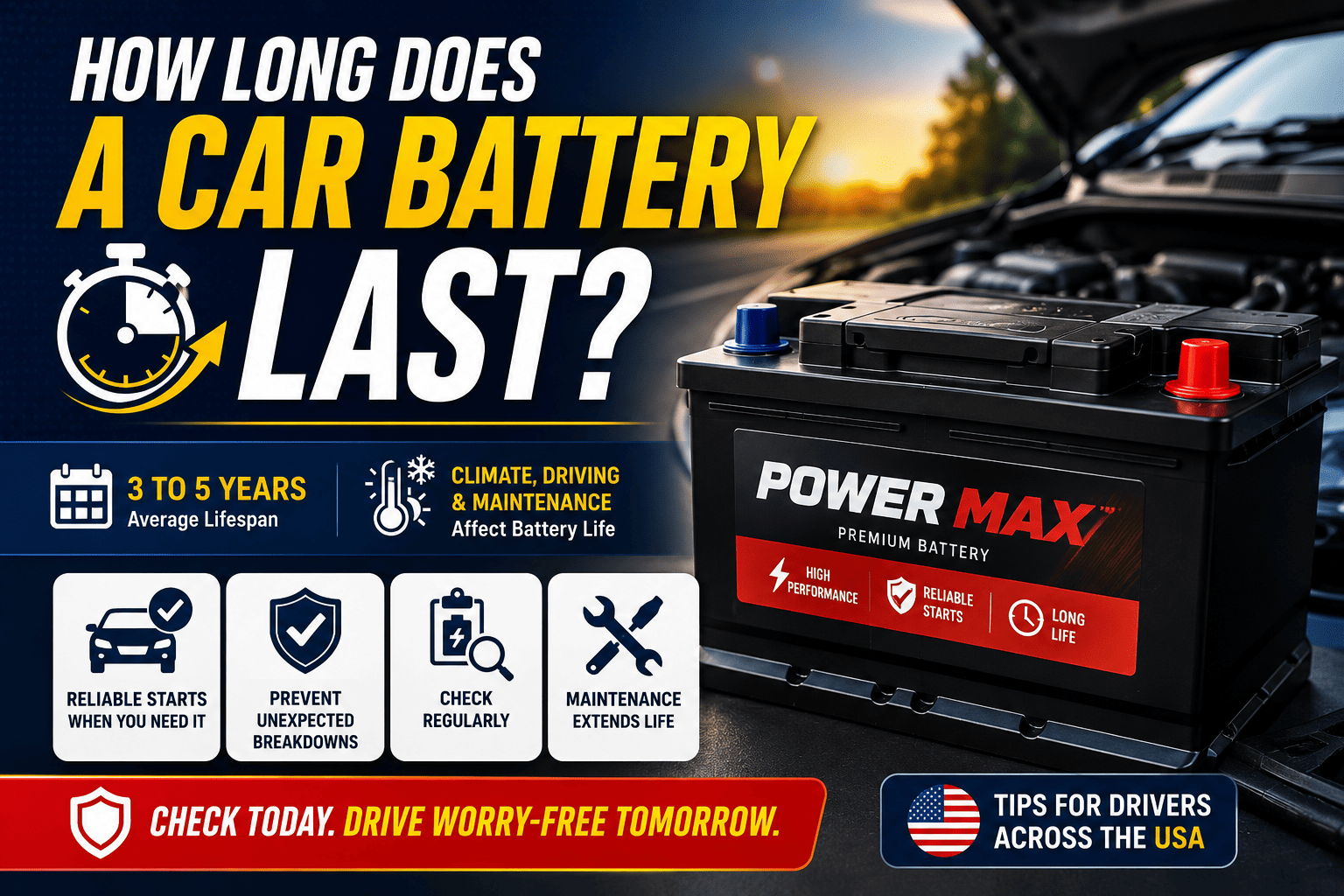
Under normal driving conditions, a standard car battery typically lasts between 3 and 5 years.
However, “normal conditions” is a variable term. Some drivers find their batteries failing after just two years, while others cruise past the six-year mark without a single jumpstart.
Modern vehicles rely heavily on complex electrical systems. From GPS and heated seats to advanced safety sensors and start-stop engine features, today’s car battery works harder than ever before. Consequently, while battery technology has improved, the demands placed on them have also increased, keeping the average lifespan firmly within that 3-to-5-year window.
2. How Does a Car Battery Work?
To understand why batteries fail, you need to understand how they function. Most internal combustion vehicles use a lead-acid battery.
[Battery Stores Chemical Energy]
       │
       ▼ (Discharges)
[Powers Starter Motor & Electronics]
       │
       ▼ (Engine Starts)
[Alternator Recharges Battery]
Inside the plastic casing, lead plates sit submerged in an electrolyte solution of sulfuric acid and water. This chemical mixture creates an electrical charge. When you turn on your ignition, the battery sends a massive burst of electrical current to the starter motor.
Once the engine runs, the alternator takes over. The alternator powers the vehicle’s electrical systems and simultaneously pumps electrical current back into the battery, recharging it for the next start.
3. Top Factors Affecting Car Battery Life
Several environmental and behavioral factors dictate whether your battery reaches the 5-year milestone or dies prematurely.
Extreme Temperatures
Many drivers believe cold winter weather is the biggest enemy of a car battery. While freezing temperatures do make it harder for a battery to turn over a cold engine, extreme summer heat causes the most structural damage. High temperatures evaporate the water inside the liquid electrolyte solution, accelerating internal corrosion and permanently weakening the battery’s capacity.
Driving Habits
Your driving routine plays a massive role in battery health.
Short Trips: If you frequently drive trips under 10 minutes, your alternator does not have enough time to fully recharge the battery. Over time, this leaves the battery in a chronic state of undercharge.
Infrequent Use: Vehicles that sit idle for weeks at a time experience “parasitic drain.” Modern cars constantly pull small amounts of power for alarms, clocks, and computer modules, slowly draining an inactive battery.
Vehicle Charging System Health
A battery is only as good as the charging system supporting it. If your alternator possesses a failing diode or a worn belt, it will undercharge the battery. Conversely, a malfunctioning voltage regulator can overcharge the battery, boiling away the electrolyte fluid and ruining the components.
Vibrations
If a battery hold-down clamp loosens, the battery will vibrate excessively within the engine bay. These physical vibrations can shake internal lead plates loose, cause short circuits, and crack the internal connections.
4. Warning Signs Your Car Battery is Failing
Batteries rarely die without dropping a few hints first. Watch out for these common warning signs:
Slow Engine Crank: The engine takes longer than usual to roll over, sounding sluggish or strained.
Dim Headlights and Electrical Glitches: Your headlights look yellow or dim at idle but brighten when you rev the engine. Power windows may also roll up slower than usual.
The “Check Engine” or Battery Light: Dashboards often display an illuminated battery icon or a check engine light when voltage drops below a specific threshold.
A Swollen Battery Case: Extreme heat can cause the battery walls to bulge outward, indicating internal failure.
The Smell of Rotten Eggs: If you smell sulfur around the hood, your battery is likely leaking gas or overcharging.
5. Different Types of Car Batteries and Their Lifespans
Not all car batteries use the same technology. The type of battery inside your vehicle directly influences its durability.
6. How to Test Your Car Battery
You can easily check your battery health at home using a digital multimeter, which measures the resting voltage.
Turn off the engine, headlights, and all electronic accessories.
Set your multimeter to 20V DC.
Connect the red positive (+) probe to the positive battery terminal.
Connect the black negative (-) probe to the negative battery terminal.
Read the voltage display.
Multimeter Voltage Guide
12.6V or higher: Your battery is fully charged and healthy.
12.4V: The battery is adequately charged but requires monitoring.
12.2V or lower: The battery is discharged and needs a recharge or replacement.
Note: If your resting voltage reads above 12.6V but the car still struggles to start, the battery may lack the necessary Cold Cranking Amps (CCA) to handle a load. A professional load test at an auto shop can confirm this.
7. Simple Tips to Extend Your Car Battery’s Lifespan
With regular maintenance, you can maximize your battery’s service life and avoid unexpected failures.
Avoid Short Commutes
Try to combine your errands into longer trips. Driving for at least 20 to 30 minutes at highway speeds gives your alternator ample time to restore the energy lost during start-up.
Keep the Terminals Clean
Corrosion appears as a white, blue, or green powdery substance on the battery terminals. This buildup creates electrical resistance, forcing your charging system to work harder. Clean the terminals regularly using a stiff brush and a mixture of baking soda and water.
Turn Off Lights and Accessories
Always double-check that your headlights, interior cabin dome lights, and radio are turned off before exiting the vehicle. Leaving a map light on overnight is one of the quickest ways to flatten a healthy battery.
Use a Trickle Charger for Storage
If you own a classic car, a motorcycle, or a truck that sits idle for long periods, invest in a smart trickle charger or battery tender. These devices monitor battery voltage and safely maintain an optimal charge level without overcharging the unit.
8. When and How to Replace Your Car Battery
Once a battery crosses the 4-year mark, you should proactively test it before every winter and summer season. If your battery fails a load test, replace it immediately.
When purchasing a new battery, look closely at three main specifications:
Group Size: The physical dimensions and terminal placement must match your vehicle’s original battery tray perfectly.
Cold Cranking Amps (CCA): This rating measures the battery’s ability to start an engine in freezing temperatures. Ensure the rating matches or slightly exceeds your vehicle manufacturer’s recommendation.
Reserve Capacity (RC): This metric indicates how many minutes the battery can supply minimum power if the alternator fails.
9. Conclusion
Your car battery will not last forever, but understanding its lifespan helps you stay ahead of potential breakdowns. By tracking its age, keeping the terminals free of corrosion, and avoiding frequent short trips, you can reliably push your battery toward the 5-year mark.
Do not wait until you are stranded in a parking lot. If your battery is approaching its fourth birthday or showing signs of fatigue, visit a local auto professional for a quick health check today.