








Knowing how to check car fluids is one of the easiest maintenance skills a driver can learn. You do not need to be a professional mechanic to check several important fluid levels. In many vehicles, a basic inspection takes only a few minutes and can help you notice a leak, low fluid level, contamination, or another problem before it becomes a costly repair.
Your car relies on several fluids to operate properly. Engine oil lubricates moving engine parts. Coolant helps control engine temperature. Brake fluid transfers hydraulic pressure when you press the brake pedal. Transmission fluid helps the transmission operate and, depending on the vehicle, may also help control temperature. Power steering fluid is used in vehicles with hydraulic steering systems, while washer fluid helps keep the windshield clear.
The important part is checking each fluid the correct way. Not every fluid is checked under the same conditions. Engine oil may require the engine to be off for a period of time. Coolant should be checked when the engine is cool. Some automatic transmissions require a specific temperature, gear position, or running condition for an accurate reading. Other vehicles have no transmission dipstick at all.
This guide explains how to check the major fluids, what the readings mean, which mistakes to avoid, and when a low fluid level is a sign that your vehicle needs professional attention.
Which Car Fluids Should You Check?
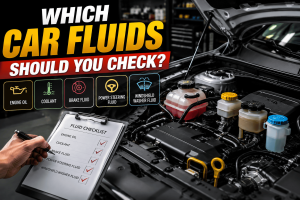
Most gasoline-powered vehicles have several fluids worth monitoring, but the exact list depends on the vehicle. The six commonly discussed fluids are engine oil, engine coolant, brake fluid, transmission fluid, power steering fluid, and windshield washer fluid. Some newer vehicles have eliminated certain serviceable fluids. For example, many modern cars use electric power steering instead of hydraulic power steering, so there may be no power steering reservoir to inspect.
Here is what each fluid does:
| Fluid | Main job | Usually checked by the owner? |
|---|---|---|
| Engine oil | Lubricates the engine | Yes |
| Coolant | Controls engine temperature | Yes |
| Brake fluid | Transfers braking pressure | Yes |
| Transmission fluid | Lubricates and operates the transmission | Sometimes |
| Power steering fluid | Helps hydraulic steering systems | If equipped |
| Washer fluid | Cleans the windshield | Yes |
Do not assume every car uses the same fluid type or checking procedure. Your owner’s manual identifies the correct fluid specifications, reservoir locations, and inspection conditions for your particular vehicle.
What You Need Before Checking Your Car’s Fluids
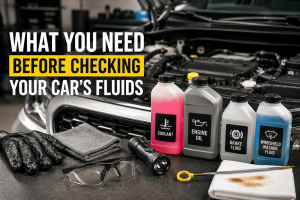
You can check most fluids with a few inexpensive items. More importantly, you need a safe place to work. Park on a level surface, put the transmission in Park or the appropriate position for your vehicle, engage the parking brake, and make sure the engine is in the condition specified by the owner’s manual.
Keep these items nearby:
- Clean microfiber cloth or paper towels
- Disposable gloves
- A flashlight
- A small funnel
- The correct replacement fluid, if topping off is necessary
- Your vehicle owner’s manual
Cleanliness matters. Wipe around a dipstick or reservoir cap before opening it so dirt does not enter the fluid system. AAA recommends using fluids that meet the automaker’s specifications and warns against overfilling.
Also avoid working around moving belts, fans, or hot engine components. Most importantly, never remove a hot radiator or pressurized coolant cap. Hot coolant can cause severe burns.
If you are unsure which cap or reservoir belongs to a particular system, stop and check the manual rather than guessing.
How to Check Engine Oil
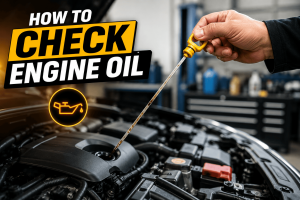
Engine oil is usually the easiest and most important fluid for a driver to check. Many vehicles use a physical dipstick, although some newer models use an electronic oil-level measurement system instead. Your owner’s manual should tell you which system your vehicle has and whether the engine needs to be warm, cold, or off for a certain amount of time.
Checking oil with a dipstick
- Park on level ground.
- Turn the engine off and follow the manufacturer’s recommended waiting period.
- Open the hood and locate the oil dipstick.
- Pull the dipstick out.
- Wipe it completely clean.
- Reinsert it fully.
- Pull it out again.
- Check the oil against the marked range.
- If necessary, add the specified oil in small amounts.
- Recheck the level after adding oil.
The oil should normally fall within the marked range. Do not automatically pour in a large amount because the level appears low. Add a little at a time and recheck it.
Pay attention to the condition of the oil as well. Darker oil does not automatically mean the engine is damaged because oil naturally changes as it circulates. However, unusual particles, sludge, coolant contamination, or a strong burnt smell deserve further attention.
Most importantly, do not overfill the engine. Too much oil can also cause problems.
How to Check Engine Coolant
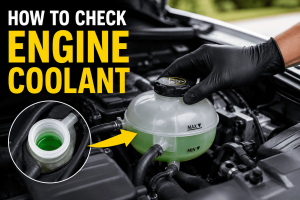
Coolant, also called antifreeze, helps keep the engine within its proper operating temperature. It also provides freeze and corrosion protection when the correct coolant is used. Most modern vehicles have a translucent coolant expansion or overflow reservoir with MIN and MAX markings.
Check coolant only when the engine is cold or sufficiently cool according to the manufacturer’s instructions. Never remove a radiator or pressurized coolant cap from a hot engine. A hot cooling system can be pressurized, allowing scalding coolant or steam to escape.
Basic coolant check
- Park the vehicle on level ground.
- Let the engine cool.
- Locate the coolant reservoir.
- Find the MIN and MAX markings.
- Check whether the coolant level falls within the appropriate range.
- Look for visible leaks around hoses, the reservoir, or under the vehicle.
If the level is low, use the coolant specified by the vehicle manufacturer. Do not assume every coolant color means the same chemical type. Color alone is not a reliable way to determine compatibility.
If you repeatedly need to add coolant, do not treat topping off as the solution. A persistent drop can indicate a leak or another cooling-system problem.
How to Check Brake Fluid
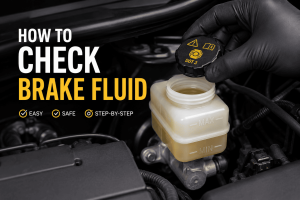
Brake fluid is critical because it transfers hydraulic pressure from the brake system when you press the pedal. The brake-fluid reservoir is commonly located near the master cylinder toward the rear of the engine compartment, although the exact location varies.
Many reservoirs are translucent, allowing you to see the fluid level without opening the cap. The level should generally be within the marked range.
Do not automatically add brake fluid every time the level drops. Brake-fluid level can change as brake components wear, and a significant or continuing drop can indicate a leak or another brake-system issue. YourMechanic notes that repeatedly topping off a brake-fluid reservoir can also create an overfill problem when worn brake linings are eventually replaced.
Look for warning signs such as:
- A brake warning light
- A soft or spongy brake pedal
- Visible fluid leakage
- A rapidly falling fluid level
- Unusual braking behavior
If you notice these symptoms, have the brake system inspected promptly. Brake problems are safety-critical and are not a good place to experiment with DIY repairs.
How to Check Automatic Transmission Fluid
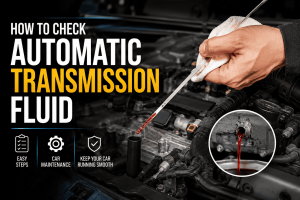
Transmission-fluid checks vary more than engine-oil checks. Some automatic transmissions have a dipstick. Others require a specific temperature, engine-running condition, gear position, or service procedure. Some newer transmissions have no traditional dipstick and should be checked by a technician using the manufacturer’s procedure.
If your vehicle has a transmission dipstick, do not automatically use the old “start the car and check it” method. First read the owner’s manual. The correct procedure can vary significantly between vehicles.
When a dipstick check is permitted, the procedure may involve:
- Bringing the transmission to a specified temperature.
- Parking on a level surface.
- Keeping the vehicle in the specified gear or Park.
- Removing and wiping the dipstick.
- Reinstalling it completely.
- Removing it again and checking the marked range.
The fluid condition can also provide clues. A strong burnt odor, unusual particles, or an abnormal appearance can indicate a transmission problem.
Never add transmission fluid simply because you have some available. Use only the exact specification required for your vehicle.
How to Check Power Steering Fluid
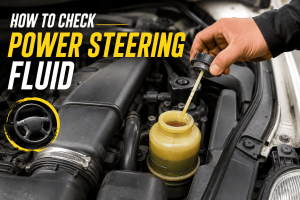
Power steering fluid only applies to vehicles equipped with a hydraulic power steering system. Many newer vehicles use electric power steering, which means there may be no power steering-fluid reservoir at all.
If your vehicle has hydraulic power steering, locate the reservoir using the owner’s manual. Some reservoirs have a visible MIN/MAX range. Others use a dipstick built into the cap.
The basic process is:
- Park safely on level ground.
- Locate the power steering reservoir.
- Check the level using the marked range or dipstick.
- Inspect the fluid for an unusual appearance.
- Add only the fluid specified by the manufacturer if the level is genuinely low.
A low level should not simply be ignored. Power steering systems can develop leaks, and you may notice whining or unusual steering effort when a problem develops.
Also, never assume power steering fluid and automatic transmission fluid are interchangeable. Some systems specify ATF, while others require a dedicated power steering fluid. Follow the manufacturer’s specification.
How to Check Windshield Washer Fluid
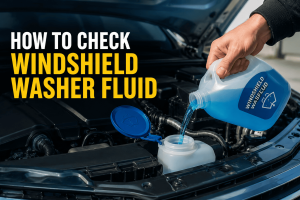
Windshield washer fluid is the simplest fluid to check and refill. The reservoir is usually a translucent plastic container with a cap marked by a windshield-washer symbol.
You normally do not need to measure it precisely. Open the reservoir and check whether the fluid level is low. If it is, add an appropriate washer fluid designed for your climate.
For U.S. drivers in cold-weather states, winter-rated washer fluid is especially important. Some summer washer fluids may not be suitable for freezing temperatures. AutoZone recommends switching to a washer fluid rated for the expected cold conditions before winter.
Do not use engine coolant, brake fluid, or another automotive fluid in the washer reservoir.
A low washer-fluid level is not usually a mechanical emergency, but having enough fluid is important for visibility. Dirt, road salt, insects, and winter grime can quickly cover a windshield.
How Often Should You Check Car Fluids?
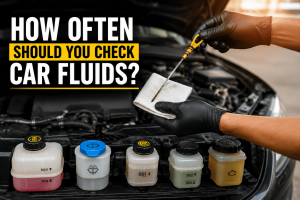
There is no single interval that applies perfectly to every vehicle. The manufacturer’s maintenance schedule should be your primary reference. However, a practical routine for many drivers is to inspect important fluid levels about once a month and before a long road trip.
AAA recommends checking essential fluids such as engine oil, coolant, and brake fluid at least monthly or before extended travel, while also following the vehicle manufacturer’s recommendations.
You may want to check more often if:
- Your vehicle has high mileage.
- You notice a leak.
- The vehicle consumes oil.
- You frequently tow or carry heavy loads.
- You drive in extreme heat or cold.
- A dashboard warning light appears.
- You are preparing for a long road trip.
The goal is not to open the hood every day. The goal is to develop a consistent habit that lets you notice changes early.
A fluid level that suddenly falls after remaining stable for months is more meaningful than simply knowing that the reservoir is low today.
Signs Your Car May Have a Fluid Problem
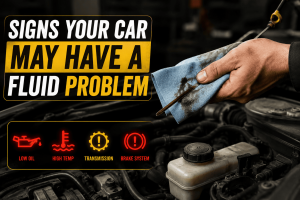
Checking fluid levels is only part of the inspection. Changes in the level, appearance, smell, or behavior of the vehicle can provide useful clues.
Watch for:
- Fluid spots underneath the vehicle
- A sudden drop in a reservoir level
- An engine-oil warning light
- A coolant-temperature warning
- A brake warning light
- Transmission shifting problems
- A soft or spongy brake pedal
- Overheating
- Steering that suddenly feels heavy
- Unusual whining or grinding noises
- A strong burnt smell
- Repeatedly needing to top off the same fluid
AAA identifies warning lights, unusual engine sounds, sluggish shifting, spongy brakes, and other changes as possible signs of fluid-related problems.
The important point is that low fluid is sometimes a symptom, not the root problem. If you continually add oil, coolant, brake fluid, or another fluid, investigate why the level keeps falling.
For example, adding coolant every few days without finding the cause is not routine maintenance. It may mean the cooling system needs inspection.
Common Mistakes to Avoid When Checking Car Fluids
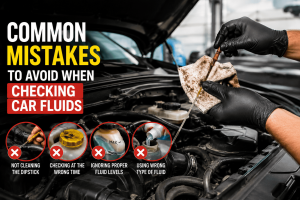
Many fluid-checking mistakes happen because drivers assume every vehicle works the same way. Modern vehicles can use different fluids, reservoirs, sensors, and checking procedures.
Avoid these common mistakes:
Checking on an uneven surface
A vehicle parked on a slope may produce an inaccurate fluid-level reading. Use level ground whenever the manufacturer’s procedure calls for it.
Opening a hot coolant system
Never remove a pressurized coolant cap from a hot engine. Wait until the system is cool and follow the manufacturer’s instructions.
Adding the wrong fluid
Do not choose a fluid based only on its color or a similar-looking bottle. Check the exact specification in your owner’s manual.
Overfilling
More fluid is not automatically better. Overfilling can create its own mechanical problems. AAA specifically advises drivers not to overfill fluids.
Ignoring repeated fluid loss
If a level keeps dropping, find out why instead of repeatedly topping it off.
Assuming every car has a dipstick
Some newer vehicles use electronic oil-level displays or transmissions without conventional dipsticks. Follow the vehicle-specific procedure.
Touching hot engine components
Even if the fluid itself is safe to inspect, surrounding components may be extremely hot after driving. Give the vehicle appropriate time to cool before working under the hood.
When Should You Take Your Car to a Mechanic?

You can handle many basic fluid-level checks yourself, but checking a level is different from diagnosing or repairing the underlying problem.
Arrange a professional inspection when:
- A fluid level repeatedly drops.
- You see a puddle under the car.
- Brake fluid is low or leaking.
- The engine overheats.
- The transmission behaves abnormally.
- The fluid contains unusual particles or contamination.
- You cannot identify the correct fluid.
- The manufacturer requires specialized equipment or a specific service procedure.
- A warning light remains on.
- You are unsure whether the vehicle is safe to drive.
Brake and cooling-system problems deserve particular attention because they can affect vehicle safety or cause serious mechanical damage.
Also remember that some fluids are not intended for routine owner-level servicing. A transmission without a dipstick, for example, may require a specific procedure to check the level accurately. In that situation, guessing can be more harmful than getting professional help.
A Simple Monthly Car Fluid Check Routine
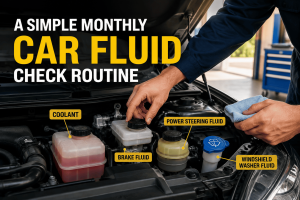
You do not need to make fluid checking complicated. A simple monthly routine can help you notice changes before they become bigger problems.
1. Park safely
Choose level ground, shut the vehicle down when required, and engage the parking brake.
2. Open the owner’s manual
Confirm the correct fluid specifications and checking conditions for your specific vehicle.
3. Check the engine oil
Use the dipstick or the vehicle’s electronic procedure. Confirm that the level is within the specified range.
4. Check the coolant
Only inspect the coolant level when the engine is cool. Look at the reservoir markings.
5. Check brake fluid
Look at the reservoir level and inspect for obvious problems or leakage.
6. Check transmission fluid if applicable
Only perform a DIY check if your vehicle provides a manufacturer-approved procedure.
7. Check power steering fluid if equipped
Determine whether your vehicle has hydraulic power steering before looking for a reservoir.
8. Fill washer fluid
Top it off with the appropriate washer fluid for your driving conditions.
9. Look underneath the vehicle
Check for fresh spots or puddles that could indicate a leak.
10. Track unusual changes
If a fluid level is noticeably lower than it was during the previous inspection, investigate instead of simply assuming the difference is normal.
This routine takes little time, but it can turn fluid maintenance from something you remember only after a warning light appears into a simple preventive habit.
FAQs
How often should I check my car fluids?
For many drivers, checking essential fluids about once a month and before long trips is a useful routine. However, your owner’s manual should take priority because inspection intervals and procedures vary by vehicle. Check sooner if you notice a leak, warning light, unusual noise, overheating, or another change in vehicle behavior.
What is the most important car fluid to check?
Engine oil is one of the most important fluids to monitor because proper lubrication is essential to engine operation. Coolant and brake fluid are also critical. A good routine is to monitor all owner-checkable fluids rather than focusing on only one.
Should I check car fluids when the engine is hot?
It depends on the fluid and vehicle. Engine oil may have a specific warm or cold checking procedure. Coolant should be checked when the engine is cool, and you should never open a hot pressurized coolant system. Always follow the manufacturer’s instructions.
Can I check my car fluids myself?
Yes. Most drivers can safely check several fluid levels at home with basic supplies. Engine oil, coolant reservoir level, brake fluid, and washer fluid are commonly accessible. Transmission and power-steering checks can be more vehicle-specific.
What happens if I put too much oil in my car?
Overfilling engine oil can cause mechanical problems, so do not assume adding more is safer. If the oil level is above the manufacturer’s specified maximum, consult the vehicle manufacturer’s instructions or a qualified technician rather than continuing to drive normally.
Why does my car keep losing coolant?
Repeated coolant loss usually deserves investigation. Possible causes can include an external leak or another cooling-system problem. Simply adding coolant again and again does not fix the underlying cause. If the engine is overheating, stop driving and have the vehicle inspected.
Do electric cars need the same fluids as gas cars?
No. Battery-electric vehicles do not use engine oil because they do not have a conventional internal-combustion engine. They can still use other fluids, including coolant, brake fluid, and windshield washer fluid, depending on the vehicle. NHTSA documentation notes that EVs do not require engine oil.
Can I use water instead of coolant?
Do not assume ordinary water is an acceptable long-term replacement for the specified coolant. The correct coolant type and mixture depend on the vehicle. Check the owner’s manual before adding anything to the cooling system.
What should I do if my brake fluid is low?
Do not automatically keep topping it off. A low brake-fluid level can be associated with brake-pad wear or a leak. If the level is significantly low, continues falling, or you notice a warning light or soft brake pedal, have the braking system inspected promptly.
Why is my transmission fluid dark or burnt-smelling?
An unusual color or burnt smell can indicate that transmission fluid needs attention, but the correct interpretation depends on the vehicle and fluid type. Do not diagnose the transmission based only on color. Check the manufacturer’s service requirements or have a qualified technician inspect it.




One comment on “How to Check Car Fluids: 6 Easy Checks Every Driver Should Know”